Recent tiger encounters in Karnataka highlight the challenges faced by local farmers as tiger populations grow alongside human communities.
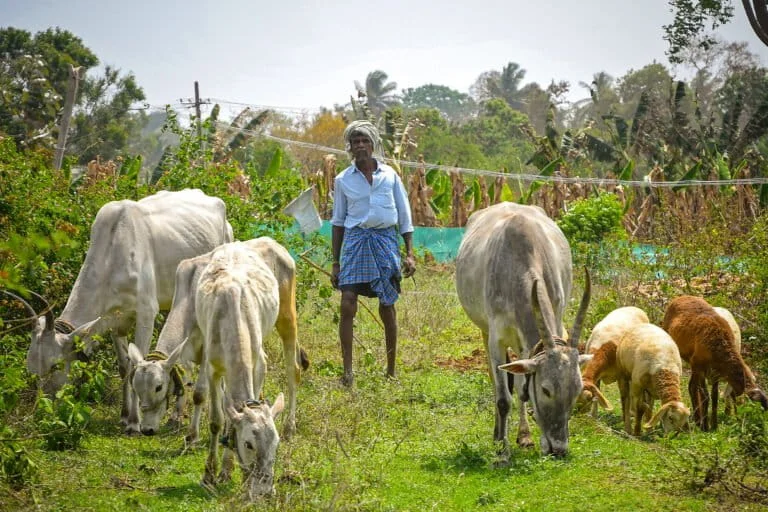
In the village of Badagalapura, Karnataka, a tragic incident has raised alarms about the growing interaction between tigers and local farmers. Mahadeva Gowda, 45, was attacked by a tiger while tending his cotton farm, leaving him severely injured and permanently blinded after multiple surgeries. His wife, Indrani, now shoulders the burden of providing for their family, as Gowda can no longer work to support them. The incident took place in mid-October 2025, underscoring the peril facing communities bordering tiger habitats.
A Disquieting Trend in Human-Wildlife Conflict
Just weeks later, another farmer, 55-year-old Rajashekarappa, lost his life in a separate tiger encounter while grazing cattle. These two incidents reflect a troubling trend in areas like Badagalapura, which lie on the fringe of what officials term a “tiger landscape.” This is not just about an increase in tiger populations; as human settlements push deeper into wildlife territories, the confrontations have become more frequent and deadly. The pattern is alarming for local residents, who are now faced with the grim reality of cohabiting with apex predators.
According to experts, areas characterized as "tiger landscapes" often struggle with human-wildlife conflict. This kind of scenario typically arises when agricultural practices extend into territories that animals have traditionally roamed. S. Prabhakaran, a former conservator of forests overseeing Karnataka's Bandipur Tiger Reserve, explains that tigers have historically called these regions home, and as human populations expand, the pressure on both communities and wildlife mounts. It’s a precarious balancing act, and unfortunately, it seems that the scales are tipping towards danger for those living nearby.
The Bandipur Tiger Reserve: A Conservation Success with Costly Consequences
The Bandipur Tiger Reserve itself, spanning 1,456 square kilometers, is home to an estimated 154 to 175 tigers as of a recent 2024 assessment by the National Tiger Conservation Authority. The growing tiger population, while a conservation success, poses serious risks to local communities, forcing a reconsideration of how people and wildlife can coexist safely in these shared spaces. While conservationists celebrate the increase in tiger numbers, the community concerns can’t be dismissed. After all, more tigers often mean more interactions with humans — interactions that can lead to devastating consequences.
It’s easy to overlook the human toll in these statistics. The unfortunate reality is that conservation efforts, while noble, don't necessarily account for the economic and safety dynamics faced by local farmers. Increased protections for tigers may inadvertently exacerbate tensions as farmers feel encroached upon in their livelihoods. In a region where agriculture is often the primary means of sustenance, this creates a precarious situation for individuals trying to support their families.
The Economic and Social Impact on Local Communities
The aftermath of a tiger attack like those experienced by Gowda and Rajashekarappa extends beyond the immediate victims. Families are thrust into financial chaos. With Gowda incapacitated and unable to work, Indrani's role shifts dramatically. If you're working in this space, you know that such life-altering incidents prompt a cascading effect throughout the community. Families lose breadwinners, and future opportunities are compromised. This isn’t just about one attack; it’s an ongoing cycle of anxiety and vulnerability for those living near tiger habitats.
The economic implications can be severe. Agriculture, especially in a predominantly rural area like Karnataka, is deeply intertwined with the community's survival. An increasing number of wild animal encounters leads to a loss of crops and livestock, which some people view as an insurmountable risk. Farmers might become reluctant or even hostile towards conservation efforts, which they feel prioritize wildlife over human lives. The balance between conservation and community welfare is fraught with complexity, particularly when the stakes are as high as life itself.
Reassessing Conservation Strategies
With these stark realities in mind, the need for reevaluating conservation strategies comes into focus. The status quo doesn’t seem sustainable. Solutions need to be developed that prioritize not just the welfare of endangered species but also the livelihoods of the people who share their environments. Community awareness programs, alternative livelihood initiatives, and better wildlife management practices might help ease the tension. Such approaches could foster coexistence, thus reducing the risk of future human-tiger encounters.
Looking Ahead: The Significance of Collaborative Efforts
What this means for you, particularly if you're involved in wildlife conservation or regional planning, is that collaborative efforts are essential. Local communities must have a voice in how conservation policies are designed and implemented. Without their buy-in, there's little chance for long-term success. Emphasizing coexistence rather than conflict should guide future initiatives, especially in regions that face ongoing challenges related to wildlife interactions.
And this is the part most people overlook: the mental and emotional toll on these communities. Beyond financial constraints, the constant fear of wildlife encounters undermines stability in social structures. If this issue isn't addressed comprehensively, the path forward seems not only murky but also increasingly fraught with danger for both tigers and the communities who share their habitat.
The delicate interplay between successful wildlife conservation and community welfare is more significant than it looks. It's time for comprehensive dialogues and actions that reflect the needs of both species, ensuring safety, sustainability, and mutual respect.



Discussion
Sign in to join the discussion.