The closure of Canada's Ombudsman for Responsible Enterprise raises serious concerns about the effectiveness of its replacement, the National Contact Point.
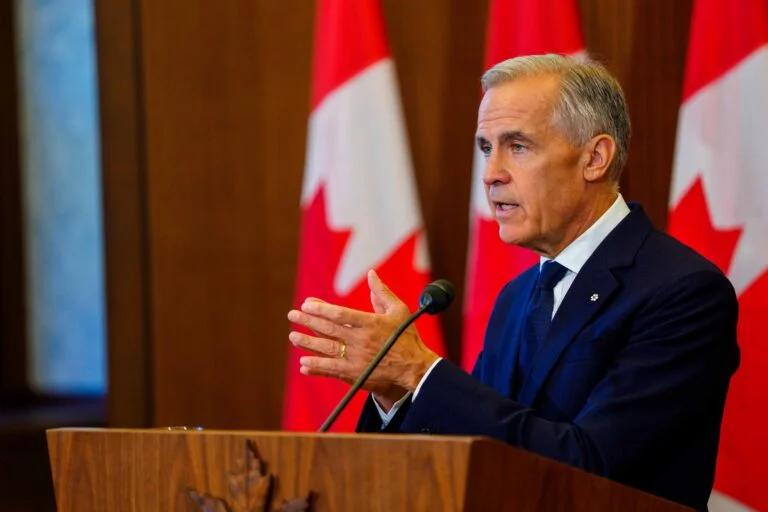
Earlier this year, the Canadian government made headlines by dismantling its independent office tasked with investigating human rights abuses linked to Canadian companies operating abroad. This office, the Canadian Ombudsman for Responsible Enterprise (CORE), was replaced by the lesser-known National Contact Point (NCP). However, critics assert that the NCP, despite its 26-year tenure, lacks the necessary independence and authority to effectively take over CORE's responsibilities.
CORE's Role and Closure
CORE was established to address complaints related to human rights violations involving Canadian firms in sectors such as textiles, mining, and oil. This role was critical, as it provided a mechanism for affected communities to voice their concerns and seek redress against powerful corporations, which often operate in countries with weak regulatory frameworks. After Mark Carney took office as Prime Minister, CORE found itself leaderless for over a year when the ombudsperson’s position went unfilled. Many felt this absence contributed to a decline in the office's effectiveness. It wasn't until June that Carney decided the office was ineffective, leading to its official closure.
The Transition to NCP
The transition from CORE to NCP has raised alarm bells among human rights advocates and watchdog organizations. The NCP was initially established as a government body to promote the OECD Guidelines for Multinational Enterprises. Ironically, its mandate overlaps with some of CORE's objectives but lacks the same level of oversight authority. Critics argue that this shift represents a downgrade rather than an improvement in corporate accountability. If you're working in this space, you'll want to pay attention to how these changes influence the landscape of corporate responsibility, especially since vulnerable populations are often the most affected.
Government's Statement
Global Affairs Canada, which previously oversaw CORE, explained that the decision to disband the office aimed to "streamline" its functions into the NCP, which it claims has a stronger track record. Yet, this assertion raises eyebrows given the NCP's history; only three out of 33 cases brought to it since 2000 have culminated in a formal agreement. On top of that, in one notable instance, resolution was facilitated by another country’s NCP. This context suggests that the government's claims of enhanced accountability are more aspirational than factual. Many stakeholders remain skeptical about the actual long-term impact of this perceived "streamlining."
This move appears to signal a troubling shift for observers who question the potential for genuine accountability in corporate practices abroad. Is merging these offices truly a step toward greater efficiency, or merely a way to obscure the lack of significant action? The implications of this transition extend beyond bureaucratic restructuring; they point toward a systemic issue of governance and corporate responsibility that many Canadian and international organizations are likely to monitor closely.
Implications and Significance
The closure of CORE does more than just change the oversight mechanism; it highlights underlying tensions in how the Canadian government views corporate responsibility abroad. Critics argue that this shift may embolden Canadian companies to operate with less scrutiny, potentially placing vulnerable communities at greater risk. After all, history shows that without a dedicated and independent oversight body, companies may prioritize profit over ethical practices.
This is more significant than it looks. The absence of a strong office like CORE can lead to increased human rights abuses. Companies often act differently when they know they're being watched. With less oversight, there’s a genuine fear that corporate malfeasance could become more prevalent. You might wonder what this means for global corporate accountability. The Canadian government may be unintentionally contributing to an environment where companies feel less pressure to conduct business ethically, knowing there’s reduced likelihood of facing consequences for harmful actions.
(and this is the part most people overlook) There's already a lot of skepticism surrounding corporate accountability in Canada; many believe that this shift sends a signal to companies that they can operate abroad with less regulatory interference. The perception alone could alter behaviors in boardrooms when decisions are made about expanding operations in high-risk areas. Such shifts could have lasting effects not just for Canadian companies, but also for the communities that depend on ethical practices to protect their rights and livelihoods.
The Future Outlook
Looking ahead, how this decision translates into real-world consequences remains to be seen. If companies perceive the environment as increasingly lenient, we could witness more instances of abuses, especially in high-risk sectors such as mining and oil extraction. The Canadian government’s focus will need to be on creating structures that ensure accountability without sacrificing oversight. It’ll also be crucial for civil society to remain vigilant, continually pressing for transparency and demanding that corporate actions are held to account.
Ultimately, the sustainability of this arrangement hinges on public perception and activism. If pressure mounts from both domestic and international fronts, there could be a push to re-establish an independent body similar to CORE—or at least, to augment the NCP in ways that address its current shortcomings. In the absence of effective oversight, the stakes are incredibly high for communities caught in the crosshairs of corporate ambition.



Discussion
Sign in to join the discussion.