Researchers propose using rooftop rainwater sprinklers to effectively reduce urban heat and cool cities as climate change intensifies heat waves.
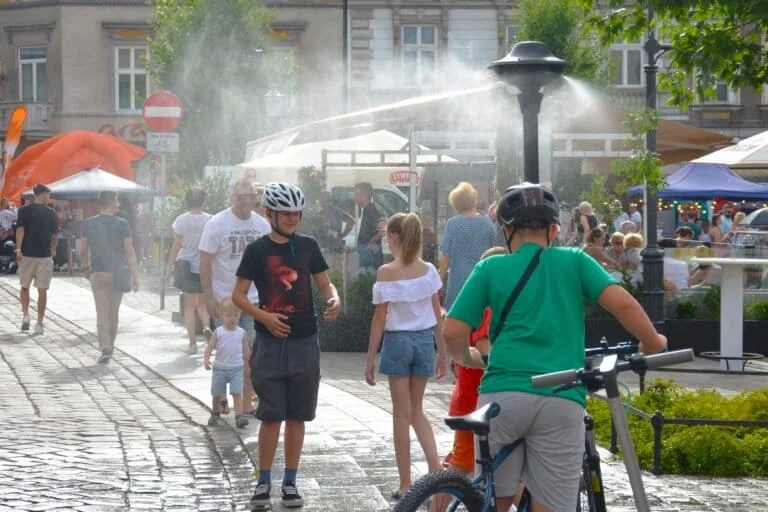
On scorching summer days, the combination of concrete and towering buildings often exacerbates the urban heat island effect, leaving city dwellers yearning for respite. As climate change ushers in an increase in heat wave occurrences, a team of researchers, led by Zhonghua Zheng from the University of Manchester, is exploring an innovative approach to tackle this issue. Their proposal focuses on integrating rainwater collection tanks with smart rooftop sprinkler systems to artificially emulate the cooling effects of summer rains.
The Urban Heat Island Effect
The urban heat island (UHI) effect is a prevalent challenge in metropolitan areas, where structures and pavements absorb and retain heat much more than surrounding rural areas. In cities, the prevalence of materials like asphalt and concrete can lead to temperatures that are significantly higher than those in less developed areas. Research suggests that UHI can increase local temperatures by as much as 5 to 10 degrees Fahrenheit in the hottest months. This phenomenon impacts residents' quality of life, causing discomfort and elevating energy demands for cooling systems, which in turn further drives up electricity costs and greenhouse gas emissions.
The Mechanism
The proposed system leverages machine learning and AI to trigger the sprinklers when outdoor temperatures reach a certain threshold. By watering rooftops during these heat peaks, the system enables evaporation, which in turn lowers roof surface temperatures. Zheng pointed out in an interview with Mongabay that “it has a dual benefit to cool both the indoor temperature and outdoor temperature.” This proactive approach is particularly intriguing due to its potential to create a feedback loop where cooler urban surfaces lead to a reduction in overall city temperatures. This sort of technological integration allows for responses that are tailored not just to general weather patterns but can be adjusted in real-time based on immediate conditions.
A Case Study in Tokyo
Using Tokyo as a model, the researchers examined the potential effectiveness of their strategy in a city notorious for its seasonal climate and advancements in rainwater collection. Tokyo has been proactive in addressing heat issues; however, the reliance on conventional air conditioning methods remains high. The findings suggest that with widespread implementation, this dual-purpose system could significantly diminish both air and surface temperatures across urban environments. Tokyo's dense population and extensive infrastructure create conditions that amplify the UHI effect, making it an ideal test bed for this technology.
Broader Implications and Context
This research sheds light on practical, ecological solutions to contemporary urban climate challenges. As cities worldwide grapple with similar temperature spikes, the implications of this research extend far beyond Japan’s capital. For urban planners and decision-makers, the technology presents a multifaceted approach to addressing rising temperatures, providing flexibility in water resource management while also mitigating heat. What makes this especially compelling is the ability to incorporate existing infrastructure; buildings designed with rainwater collection systems could seamlessly integrate these smart sprinklers, reducing the need for extensive new developments.
Future Outlook
As climate change continues to influence weather patterns, cities around the globe will need to adapt swiftly and effectively to escalating temperatures. The proposed sprinkler system isn't just about comfort—it's also about resilience in urban design. If you're working in this space, consider the intersection of technology and sustainability that this proposal embodies. It forces a reevaluation of how cities can harness natural phenomena to combat modern challenges. With urban areas already teetering on the brink of increased heat-related issues, the pressure for effective and sustainable solutions is mounting. Will we see a shift towards adopting these adaptive technologies, or will cities continue to rely on traditional methods? That remains to be seen.
It's also essential to consider the challenges associated with implementing such systems. Many urban areas face bureaucratic hurdles that can delay or inhibit the adoption of new technologies. Funding, public acceptance, and maintenance remain significant concerns that could impede the rollout of smart sprinkler systems. These potential obstacles deserve attention as policymakers navigate the implementation of effective heat mitigation strategies. (And this is the part most people overlook.)
The integration of smart technology into urban cooling systems presents a promising avenue for addressing the UHI effect. However, successfully transitioning from concept to implementation will require concerted efforts from various stakeholders. Only through strategic collaborations and thoughtful urban planning can such innovations transform cityscapes into cooler, more livable environments for future generations. To read more about their research, visit Mongabay.



Discussion
Sign in to join the discussion.