The sand trade in Mahera, Sierra Leone, provides vital income for women, yet its sustainability hinges on changing tides and economic pressures.
Economic Lifeline in Mahera
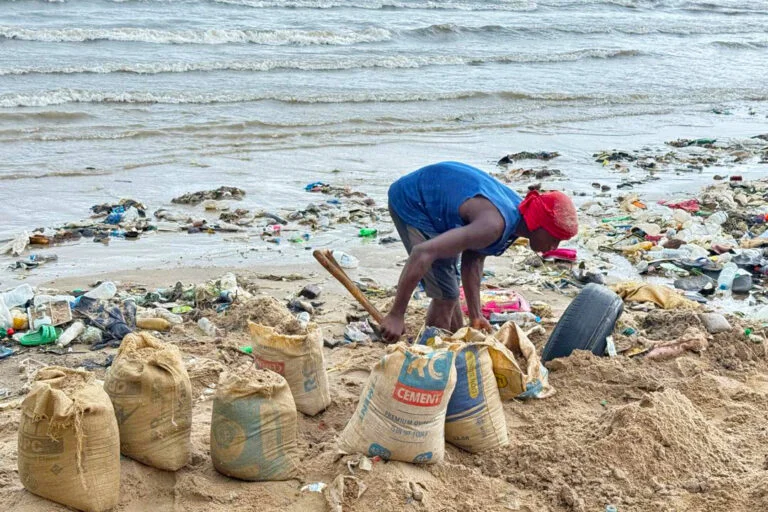
In Mahera, a coastal region in Lungi, Sierra Leone, the ebbing tide reveals an essential economic activity. Young men begin shoveling sand into bags, transporting their haul to areas where women buyers negotiate prices. These dedicated sand sellers play a pivotal role in this local economy, supplying sand to truck drivers for distribution throughout regions like Lungi and Port Loko. The revenue generated serves as a lifeline for their families, covering food, schooling, and other necessities. The sand trade is not simply about commerce; it's woven into the fabric of daily survival.
The reliance on sand harvesting underscores a broader trend seen in various coastal communities around the globe. As natural resources and formal job opportunities become scarce, people turn to available local materials to support their families. In Sierra Leone, a country recovering from years of civil conflict and economic hardships, the significance of such grassroots economic activities can't be understated. For many, the sand trade represents a pathway to financial independence—albeit an unstable one.
Women at the Forefront
The sand trade has evolved as a coping mechanism for many, particularly women, who have turned to this work as a means of survival. Aminata Kargbo, the chairperson of the local sand sellers, exemplifies this entrepreneurial spirit. After her husband passed away, she found herself in charge of supporting her seven children through this trade. “Most of these women have lost their husbands, and the money we make goes to support our children,” Kargbo explains. Currently, she oversees a group of 19 sellers, predominantly women who have faced similar hardships, including the lasting impacts of Sierra Leone’s civil strife from 1991 to 2002. These are not just statistics; they represent the resilience of women in a post-war society striving for stability.
Across the globe, women are often disproportionately affected by economic downturns and conflicts, yet they frequently emerge as leaders in local economies. Kargbo’s story highlights a trend: women stepping into the void left by lost partners, often taking on multiple roles to ensure their families' survival. This transition isn't merely about surviving; it's about taking charge in a tumultuous environment where traditional support systems may have collapsed. The efforts of women like Kargbo lay the groundwork for future economic resilience and suggest a shift in societal roles as women increasingly become household breadwinners.
Here’s the thing: these women are not just participating in the economy; they are shaping it. Their success, however modest, has implications beyond the immediate financial relief it provides. It inspires a new generation, potentially changing societal perceptions of women’s roles in both the household and the community. There’s empowerment in this struggle that typically goes unnoticed. And yet, as much as they’ve achieved, the obstacles they face highlight the broader systemic issues at play.
Challenges Ahead
However, the sand-selling business encounters limitations due to the natural tides. Sales can only occur during low tide, leaving sellers out of work during high tide. The unpredictability of their trade, combined with various external economic factors, raises questions about its long-term viability. As demand for sand continues to rise, so too does the vulnerability of this pivotal market for women in Mahera. These limitations emphasize the fragile nature of such livelihoods.
Environmental factors pose additional challenges. Climate change is an increasingly pressing concern, affecting not only tides and weather patterns but also the entire ecosystem that supports these sand sellers. Increased flooding and coastal erosion could threaten their primary resource, while also raising the stakes for those reliant on it. If you’re working in this space, consider how shifting weather patterns might redefine not just the local industry but the very community that depends on it. What’s often overlooked in the excitement of burgeoning markets is the unpredictability of the environments where they thrive.
Then there’s the question of regulation: informal economies often lack oversight, which can lead to exploitation. Without proper measures in place, the workers involved in sand harvesting might find themselves vulnerable to unfair pricing practices or even legal consequences as governments seek to regulate environmental impact. The irony is striking—those who sustain their communities through resource extraction stand to lose the most if not protected by fair policies—an unsettling thought indeed.
Future Outlook and Implications
The future of the sand trade in Mahera holds significant implications, both locally and potentially for other regions facing similar circumstances. If current trends continue, the local economy may become increasingly reliant on women-led initiatives, reshaping the socio-economic landscape of the community. This shift could serve as a catalyst for broader discussions about women's rights and economic opportunities in Sierra Leone and beyond.
The lessons that emerge from Mahera’s sand sellers can resonate on a global scale. Communities that empower women through entrepreneurial opportunities often see enhanced stability and resilience. Investing in training, resources, and protective policies could yield multi-layered benefits—not just for the women involved but for entire communities seeking to recover from past traumas.
Ultimately, while the sand trade seems straightforward, its implications are anything but simple. The resilience of the women in Mahera speaks to a deeper narrative about adaptation in the face of adversity. If authorities recognize this potential and act accordingly, Mahera could very well transform from a simple coastal town into a model for community empowerment and economic sustainability. What comes next is crucial—its ripple effects could reshape whole communities. Watch this space.


Discussion
Sign in to join the discussion.