A Tulane and Glass Half Full study found no significant survival differences for several estuarine animals exposed to recycled glass sand.
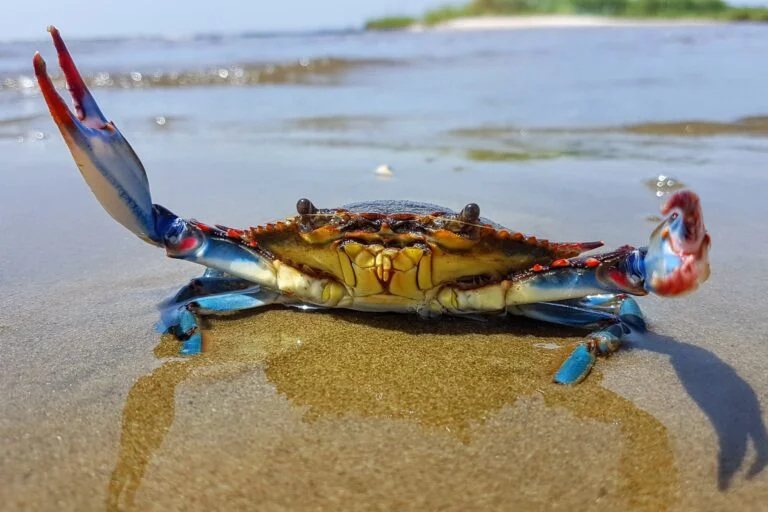
Louisiana’s coastal restoration projects face a basic constraint: suitable sand and sediment are scarce, even as erosion continues to claim land. A study of recycled glass sand offers an early sign that the material may be usable, though its environmental effects need further investigation. That distinction matters: a material can be promising in a controlled study and still raise questions when it’s used across a larger, changing coastline.
Testing an alternative fill material
The state loses land at a rate equivalent to a soccer field every 100 minutes. Over the past century, it has lost 4,662 square kilometers (1,800 square miles), as sea level rise and human activities—including oil and gas extraction and changes to the Mississippi River’s course—intensify erosion. Wetland loss and altered estuaries leave communities, ecosystems and Louisiana’s $319 billion seafood industry more exposed to storms and flooding. These pressures help explain why restoration plans depend not just on where to rebuild, but on whether enough appropriate material is available.
Louisiana has spent billions of dollars rebuilding shorelines and barrier islands with offshore sand and river sediment. Since 2020, New Orleans company Glass Half Full has tested another source: sand and gravel made from discarded bottles, used in small experimental islands and berms. Recycled glass could, in principle, add to the supply of material available for these projects. But the existence of a new source doesn’t by itself show that it can meet the physical and environmental demands of coastal restoration.
That’s a practical question as much as a scientific one. Fill has to function in a setting shaped by water, sediment movement and living organisms; material that works in one location may not behave the same way elsewhere. Small trials can help researchers examine specific effects under defined conditions, while leaving open questions about how results carry over to larger projects. And the available account doesn’t establish how much recycled material could be produced or where it might be suitable.
Early results, open questions
Glass Half Full and Tulane University launched Project ReCoast, a five-year research effort funded by the U.S. National Science Foundation, to study recycled glass sand in coastal restoration. A study published in Restoration Ecology in April reported no significant difference in survival among several native estuarine animals exposed to the recycled material compared with other materials included in the study. That is a useful early finding: it offers evidence about survival for the animals and conditions examined, without answering every question about ecological effects.
“No significant difference” is a bounded result. It doesn’t establish that recycled glass has no environmental effects, nor does it show that every species, exposure period or coastal setting would produce the same outcome. The study’s reported finding concerns survival among several native estuarine animals. Other effects, and performance in the field over time, require separate evidence. Here’s the thing: a result that supports further testing can be meaningful without amounting to a green light for broad use.
That caution isn’t a reason to dismiss the material. It’s a way to read the evidence at the scale the study supports. Similar restoration materials are evaluated for both their physical role and their effects on surrounding environments, and those questions can’t always be settled by one experiment. ReCoast’s five-year research period provides a structure for continuing the investigation, though the source doesn’t specify what later studies will measure or when their results will appear.
What the material could change
The case for recycled glass starts with a supply problem. Restoration work needs suitable fill, while Louisiana’s coast continues to lose land. If discarded bottles can be processed into material that performs adequately and has acceptable environmental effects, it could become another option for some projects. This is more significant than it looks: even a limited additional source could be useful where conventional materials are difficult to obtain. But the study doesn’t establish that recycled glass can replace offshore sand or river sediment, or that it can supply projects at the scale the coast requires.
There’s also a difference between showing that a material can be used in small experimental islands and berms and showing that it’s appropriate for broader restoration. Larger projects bring questions about consistency, placement and how the fill interacts with local conditions. The findings reported so far don’t resolve those questions. (And this is the part most people overlook.) A new material’s value depends not only on whether it can be made, but on whether it can be used in the right places without creating problems that the initial tests weren’t designed to detect.
If you’re working in this space, the next useful evidence is likely to be evidence that connects laboratory or controlled findings with conditions at actual restoration sites. That means asking what happens beyond animal survival, how results vary across settings and whether the material continues to serve its intended purpose. Those are questions for further research, not conclusions the published finding can supply on its own.
For now, recycled glass sand is an option under investigation. The finding offers a reason to keep studying it, while the limits of the evidence argue for care in interpreting it. A possible new source of fill. Still an open question.
The finding supports further study, but it doesn’t settle how glass-derived fill affects coastal environments over time. That evidence will shape whether the material can move from small trials to larger restoration projects.
This article was originally published on Mongabay



Discussion
Sign in to join the discussion.