Dhaka and Chattogram received about three-quarters of bank lending in early 2026, while climate-exposed regions remain underserved.
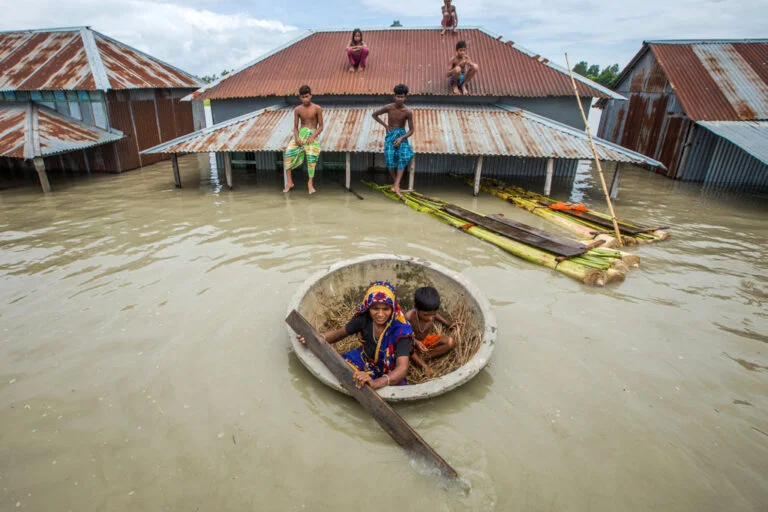
For fish-business owner Saiful Gazi, getting a bank loan to grow his business has proved harder than turning to a high-interest lender. The 34-year-old supports a family of four in Ramjannagar Union, Shyamnagar, an area of Satkhira exposed to climate risks. He survived Cyclone Aila, which struck Bangladesh on May 25, 2009, killing 190 people and affecting about 3.9 million. After starting his fish business in 2022, Gazi applied to a private bank for expansion financing. The bank rejected his application because he lacked collateral and required documents, so he borrowed from a local NGO to keep the business running. That sequence shows the practical cost of a credit decision: a business owner who can't meet a bank's conditions may still find money, but at a higher price. For a small operation, expensive borrowing can leave less cash for stock, equipment, or the ordinary disruptions that make growth difficult.
His experience reflects a broader gap: parts of Bangladesh most exposed to cyclones, floods, salinity and river erosion receive only a small share of bank credit, raising questions about access to financing for climate adaptation. The problem isn't simply whether loans exist in the banking system; it's whether businesses in exposed areas can qualify for them on workable terms. Credit rules built around collateral and paperwork can be difficult for owners whose assets or records don't fit a bank's standard expectations. That doesn't establish that every applicant in these areas faces the same barrier, but Gazi's case gives the gap a human scale. Climate pressure is already part of the setting in which local businesses operate, while access to the funds that might help them adapt remains uneven.
Credit flows to the main commercial centers
Bangladesh’s eight administrative divisions are Barishal, Chattogram, Dhaka, Khulna, Rajshahi, Rangpur, Mymensingh and Sylhet. Bangladesh Bank data show that lending is concentrated in Dhaka and Chattogram, the country’s main commercial and industrial centers. Together, they accounted for about three-quarters of total bank loans and advances in the April–June quarter of 2026. That concentration may reflect where commercial activity and established borrowers are clustered, but the figures also raise a basic question about who can access credit elsewhere. A national lending total can suggest a healthy flow of money while concealing how unevenly it reaches different regions.
The geographic split matters because businesses don't all face the same operating conditions. In areas exposed to environmental hazards, owners may need financing to maintain or expand livelihoods under added pressure, while banks still assess applications through familiar requirements such as collateral and documentation. Similar systems typically favor applicants who can present assets and records in the form lenders expect; that can make access harder for smaller businesses, even when the underlying business need is clear. The data described here don't show how much credit goes to individual borrowers or why each loan is approved. They do show a pattern that warrants attention: lending is heavily concentrated in the two main commercial centers, while several climate-exposed divisions are identified as underserved.
The imbalance is especially stark for climate-exposed areas, including Barishal, Khulna, Sylhet and Mymensingh. Gazi’s failed application shows how collateral and documentation requirements can leave small businesses relying on more expensive local borrowing, even in communities facing mounting climate pressures. Mongabay
When a rejected application changes the cost of growth
Gazi's choice wasn't between a bank loan and no loan at all: he turned to a local NGO to keep his business running. But the reported high interest on that borrowing makes the distinction consequential. A loan can preserve day-to-day operations and still make expansion harder if repayments absorb money the business could otherwise use. The source doesn't give the loan amount, interest rate, or repayment terms, so the size of that burden can't be calculated. The direction of the problem is clear, though: when formal credit is out of reach, the available alternative may carry a higher cost.
That trade-off can matter beyond one owner's balance sheet. Small businesses support household income and local commerce, and their ability to borrow can shape whether they can maintain activity through difficult periods. A bank's lending decision is made against its own requirements, while the borrower has to manage the consequences in a place exposed to climate risks. This is more significant than it looks. A rejected application may be one instance, but the regional lending pattern makes it reasonable to ask whether standard lending processes are reaching the businesses that face the greatest need to adjust.
What the credit gap means for adaptation
Access to finance doesn't by itself protect a business from a cyclone, flooding, salinity, or erosion. Nor does the available information show that a loan would have changed Gazi's outcome or made his business more resilient. Still, financing can give an owner room to make decisions about a business's needs; without it, choices may narrow to costly borrowing or keeping operations at their current scale. If you're working in this space, the key issue is how banks assess borrowers whose livelihoods are tied to climate-exposed places, and whether documentation and collateral requirements reflect the circumstances those businesses face.
Here's the thing: a large share of lending in commercial centers doesn't tell us whether credit is being directed efficiently or fairly, and the regional figures alone can't answer why. But the contrast between the national flow of bank loans and Gazi's rejected application gives policymakers, lenders, and business owners a concrete question to examine: can borrowers in exposed regions meet the terms set by formal lenders? The numbers here are underwhelming as a measure of access for those communities. They describe concentration, not the full route from application to approval, and more detail would be needed to distinguish limited demand from barriers to lending.
And yet, Gazi's experience gives the data a consequence that is easy to miss in a regional breakdown. When a small-business owner needs outside money to keep operating, the conditions attached to credit can shape what happens next. (And this is the part most people overlook.) The gap isn't only about where banks record their loans; it's also about whether a borrower facing local climate pressures can present the forms of security and paperwork the bank accepts. For Gazi, the bank's answer was no, and an NGO loan became the route to keeping the business running. The wider figures leave open how many others encounter the same constraint. A closer account of applications, approvals, and borrowing costs across regions would help establish how much of the imbalance reflects lender practice, borrower circumstances, or both. Until then, the pattern points to a persistent question rather than a settled explanation. Access remains uneven.

Discussion
Sign in to join the discussion.