In Thailand, wildlife officers are rehabilitating rescued leopard cats for release, addressing threats from habitat loss and hunting.
Rehabilitation Efforts for Leopard Cats
At the Department of National Parks and Wildlife in Khon Kaen, Thailand, wildlife officers work tirelessly to rehabilitate leopard cat cubs. Addressing the challenges these animals face requires not only expertise but also a deep commitment to their welfare. Recently, a small cub was fed formula milk from a syringe, reflecting the meticulous care these animals receive. Visitors to the center often stand in awe of such moments, a reminder of the fragility of wildlife. This rescue center plays a pivotal role, taking in dozens of leopard cat cubs every year that have been lost or injured. It serves as a sanctuary, but also as a microcosm of a larger conservation fight, one that grapples with human encroachment on natural habitats.
Transitioning to the Wild
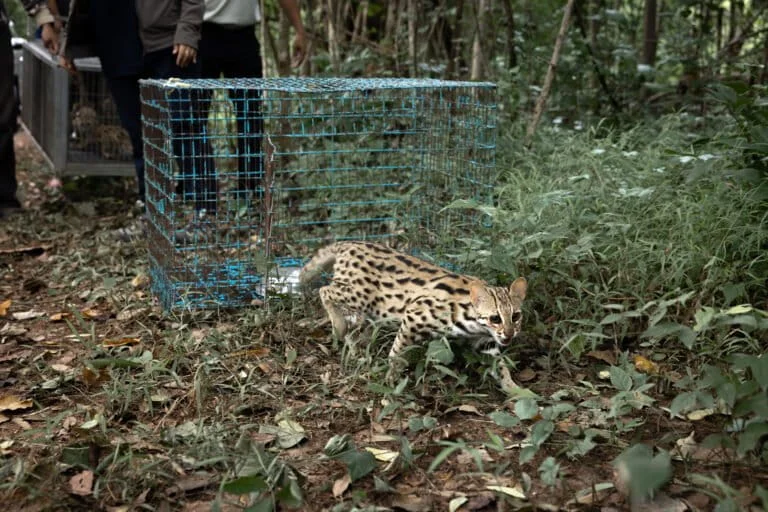
Currently, 15 larger leopard cats, rescued months prior, pace in their cages, displaying a blend of wild instincts and domestic cat appearances. This hybrid behavior illustrates their adaptability—a trait that’s both advantageous and detrimental in their quest for survival. Nine of these cats, now between 8 and 9 months old, are set for release into a nearby forest. Reintroduction isn’t a simple task; it’s a process that requires careful monitoring and preparation. The remaining six younger cats will stay at the center for two additional months, honing their climbing and hunting skills in specialized rehabilitation pens. These pens simulate a natural environment, offering climbing structures and prey dummies to stimulate the cats' instincts.
The time spent in rehabilitation is crucial. If they don’t adapt during this phase, the odds of survival in the wild diminish significantly. What this means for you, the conservation enthusiast or wildlife professional, is an understanding of the nuances involved in wildlife rehabilitation. There’s a practical urgency to ensuring these cubs develop the skills they’ll need in their natural habitats—skills that many might take for granted.
Conservation Status and Challenges
Leopard cats, classified as least concern by the IUCN, are facing increasing threats due to habitat loss and hunting. While they might not be on the brink of extinction, their populations are increasingly vulnerable. This status can be misleading; the adaptability of these animals often masks the severity of their plight. These adaptable felines often inhabit areas close to agriculture, with females frequently raising their young in sugarcane fields. The situation is ironic: the very environments that provide cover from predators also expose them to dangers tied to human activity. Female leopard cats are forced to navigate a precarious balance, raising their young in spaces that may be teeming with risks associated with agricultural practices.
As the rescue center continues its work, the lives of these leopard cats hang in the balance, highlighting the urgent need for habitat protection in northeastern Thailand. Conservation isn’t merely a matter of monitoring numbers; it requires a broader strategy to protect ecosystems where these cats thrive. Authorities and NGOs must collaborate, focusing not just on immediate rescue efforts, but also on long-term sustainability to secure the future of these feline residents.
Implications for Future Conservation
The circumstances surrounding leopard cats in Thailand reflect wider conflicts between wildlife conservation and human development. As more land gets converted for farming or urban use, the natural habitats these cats depend on are stripped away. This is more significant than it looks; it’s not just about leopard cats. It’s about biodiversity and the intricate webs of life that sustain our environment. If these cats were to decline, it would signal deeper issues within the ecosystems they inhabit.
Looking forward, conservation efforts need to address the root causes of habitat loss. These include agricultural policy, land management practices, and public awareness campaigns aimed at reducing hunting and fostering coexistence between locals and wildlife. Citizens often play a role in conservation, and education can shift behaviors that threaten these animals’ survival.
(And this is the part most people overlook) — community engagement is key. Educating local populations about the ecological importance of leopard cats can create stakeholders who value their preservation. Moreover, engaging local farmers in conservation initiatives can lead to better practices that protect both wildlife and livelihoods.
When it comes to the leopard cats of Thailand, the story is complex but worth following closely. Their fates are intertwined with the health of ecosystems and the attitudes of those living near them. If we want to see these cats flourish, we’ll have to challenge the status quo on multiple fronts. That said, the tireless work at rehabilitation centers is just one piece of a much larger puzzle. How these animals are integrated back into the environment will ultimately determine not only their survival but also the future of the biodiversity they represent.



Discussion
Sign in to join the discussion.