Paul Spong's enduring commitment to whale research spans nearly six decades, impacting the understanding and conservation of orcas.
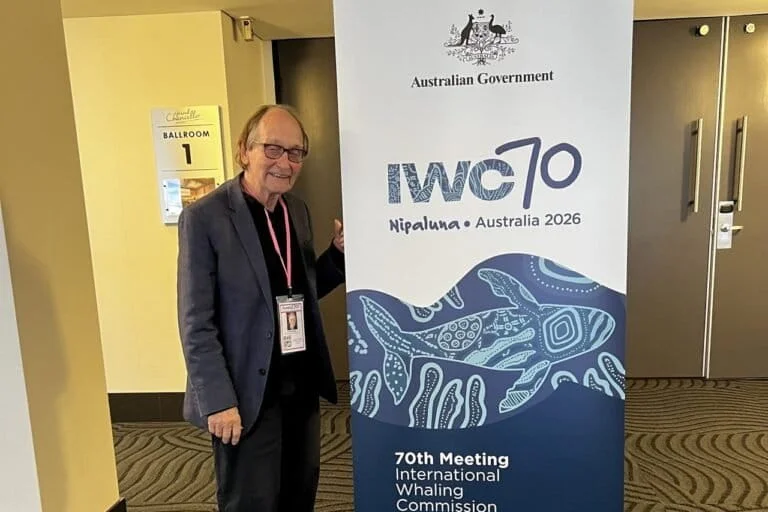
Early Days and the Catalyst for Change
For nearly sixty years, Paul Spong has dedicated his life to the study of whales, marking him as a prominent figure in cetacean advocacy. Originating from Aotearoa New Zealand, he made his way to the United States in the 1960s to pursue studies in physiological psychology at UCLA's Brain Research Institute. His early experiences laid the groundwork for a career that would challenge conventional practices regarding marine mammals. Spong's deep-rooted empathy for these creatures became apparent when he began working with wild orcas, a journey that would lead him to question the ethics of captivity.
His foray into cetaceans began in 1967 when the Vancouver Aquarium employed him to investigate the behavior of Skana, a wild orca captured from Puget Sound that year. This marked a pivotal moment not just for Spong, but for whale advocacy as a whole. Capturing wild intelligence and self-awareness within such majestic creatures is no small task; it requires not only observational skills but also a profound willingness to engage ethically with the subject of study.
The Awakening of Awareness
During his time with Skana, Spong conducted various behavioral and auditory experiments. The insights he gained were not just intellectual; they were transformative. As he observed the orca's behavior, it quickly became clear to him that the creature possessed a high level of intelligence and self-awareness. Anyone who’s spent time watching such animals can sense their complexity. Driven by these insights, he became an outspoken advocate for Skana’s release. His conviction was simple yet powerful: sentient beings should not be held in captivity for human entertainment or scientific study.
Unfortunately, his growing advocacy did not align with the aquarium's interests. Spong's contract was not renewed, and the aquarium retained Skana until her passing in 1980. This decision profoundly impacted Spong's future endeavors, awakening a determination to push against the status quo in marine conservation. The ethical dilemma—and emotional weight—of knowing Skana's plight drove him to explore more humane ways of studying cetaceans without causing harm or disruption to their natural lives. The tragedy of Skana stayed with him, influencing a new generation of marine conservationists who would come to see whales not just as subjects but as beings deserving of dignity.
From Observation to Research Facility
Moving forward, Spong recognized that understanding orcas in their natural environment was crucial. In 1970, he embarked on a research expedition to Hanson Island off the northeastern coast of Vancouver Island, British Columbia. Armed with nothing but a tent and a hydrophone, he set out to observe and listen, seeking insights into their lives away from human interference. This minimalist setup seems almost quaint compared to modern research methods, but it led to profound discoveries about orca communication and social structures.
What began as a summer study evolved into a long-term project, culminating in the establishment of the OrcaLab in the late 1970s. Today, Spong co-directs the organization with his wife, Helena Symonds. They’ve adopted a passive approach to observation, using land-based hydrophones and cameras to monitor the whales. This method reinforces their commitment to respecting the natural behaviors of orcas, allowing these animals to thrive in their environment while still yielding valuable scientific insights. The choice to observe rather than intervene is significant; it suggests a growing recognition within the scientific community that ethical methods can coexist with rigorous research.
Image courtesy of OrcaLab. Northern resident orcas near Hanson Island in British Columbia.
Significance of Ethical Research in Marine Science
What Spong has done isn’t just about tracking orcas; it punctuates the shift towards ethical research in marine science. This perspective resonates as more advocates and researchers begin to question the practices of the past. Historically, many marine facilities focused on observation and study rooted in anthropocentric views—valuing human experience above all else. But times are changing. There’s a growing acknowledgment that cetaceans deserve better treatment and that understanding them requires respecting their autonomy.
If you're working in this space, consider how your methods align with the ethical principles of observation versus intervention. The traps of old paradigms are enticing, promising data and insight that might not be achievable through hands-off techniques. But as exemplified by Spong’s work, profound insights can emerge simply through careful, respectful observation.
Future Outlook: The Road Ahead for Cetacean Advocacy
The road ahead for cetacean advocacy is fraught with challenges but also opportunities. Each study and observation contributes to a cumulative body of knowledge that can better inform public policy and conservation efforts. This raises pertinent questions about how society views marine mammals. Are they just subjects of research, or are they sentient beings that deserve proper habitats and freedom?
As awareness grows, so does the number of advocates and organizations dedicated to cetaceans. The outcomes of these passionate initiatives can affect local ecosystems and global environmental policies. The industry must adapt, shifting from a model that exploited these creatures to one that prioritizes their well-being and conservation.
Spong's trailblazing work reminds us that knowledge cannot be pursued selfishly; it should enrich our understanding and lead to more compassionate treatment of all beings. The challenge now is to see how collective efforts can reshape marine research into a field that embodies ethical standards, ensuring that future generations witness the majesty of orcas in their natural habitats, free and thriving.
This article was originally published on Mongabay



Discussion
Sign in to join the discussion.