Sirachai Arunrugstichai uses photography to raise awareness about marine conservation, sharing insights from his unique experiences and recent research.
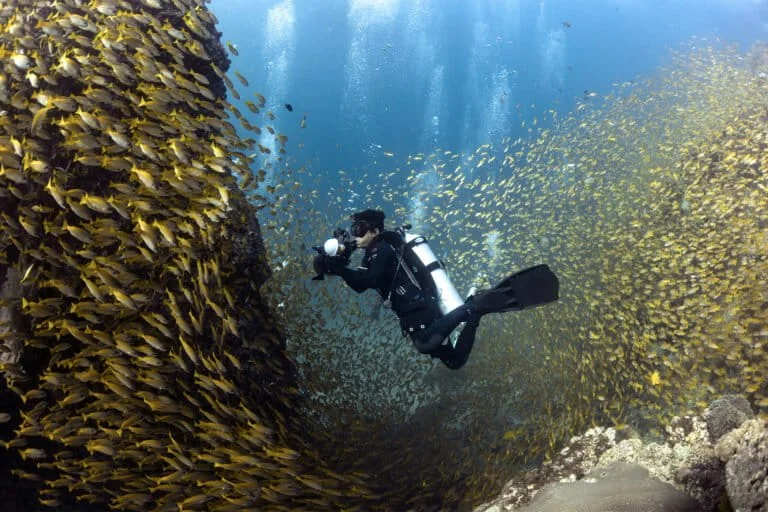
BANGKOK — Sirachai “Shin” Arunrugstichai, a skilled marine biologist and photojournalist, has gained recognition for his impactful photos capturing the stark realities of Thailand's marine environment. Notably, his heart-wrenching image of Marium, an orphaned dugong, went viral and helped elevate public consciousness around marine conservation efforts in the region. This moment is emblematic of a broader trend where a single image can become a rallying point for environmental advocacy.
His recent contributions include participating in a scientific study analyzing necrophilia behavior among squids, a research initiative sparked by his underwater photography. The 39-year-old's dual focus on science and visual storytelling showcases the powerful role of imagery in environmental activism. It’s a testament to how art and science can synergize to tackle pressing ecological issues.
Uncovering Unique Behaviors
Shin's research journey began during his time at the Mergui Archipelago in Myanmar from 2019 to 2020, where he encountered ghost fishing nets entangling coral reefs. These abandoned nets pose significant threats to marine life, often leading to the entrapment and slow death of various sea creatures. While diving to disentangle the nets, Shin witnessed what seemed to be two squids in a mating ritual. However, closer inspection revealed a shocking dynamic: a trapped squid, already in decay, was still engaged in mating. This bizarre observation raises complex questions about animal behavior, particularly in extreme conditions, and challenges the conventional understanding of mating rituals in marine life.
Such findings are essential for expanding the scientific community's knowledge about how organisms adapt—or fail to adapt—to their environments. The implications of his work could affect conservation strategies significantly. If animals are exhibiting such unusual behaviors under stress, what does that say about their habitats and the urgent need for preservation? Imagery in these contexts isn't just for beauty; it becomes crucial documentation that can aid scientists and conservationists alike in their efforts.
From Photography to Public Awareness
This peculiar observation of a dying squid mating prompted further inquiry into the behavior of these creatures, blending his scientific knowledge with visual documentation. Shin surfaces unique narratives that might otherwise escape attention. His work continues to bridge the gap between awareness and action, using the emotional power of photography to advocate for the ocean's fragile ecosystems. What this means for you, particularly if you're working in this space, is that effective storytelling can shift narratives and inspire change more effectively than conventional methods.
Images like Shin's not only evoke strong emotional responses but also serve as a vehicle for educating the public about pressing environmental issues. Public reactions to these visuals can lead to increased urgency in conservation dialogues. Take, for instance, the impact of Marium’s story; it sparked conversations about marine habitat protection and ethical considerations regarding wildlife tourism. One photograph can create ripples of change, urging stakeholders—governments, NGOs, and the public—to take action.
In the digital age, the role of social media amplifies this effect. Viral stories can reach global audiences at an unprecedented scale. This has altered how environmental campaigns are structured, leaning heavily on viral moments to capture attention. Shin's work exemplifies a shift in grassroots activism, where individuals can influence the direction of policy and conservation through compelling narratives. (And this is the part most people overlook: the sheer power of a single image to mobilize masses.)
Image courtesy of Pratch Rujivanarom. For more on Sirachai's projects, visit Mongabay.
Implications for Future Conservation Efforts
The implications of Shin's work extend beyond individual photographs. They challenge other scientists and activists to incorporate visual elements into their initiatives as a means of education and advocacy. It’s a call to action for the scientific community to consider how imagery can complement traditional research methods. This approach enhances data communication, making scientific findings more relatable and impactful for the public.
Moreover, as environmental challenges intensify, the urgency for multi-faceted strategies becomes clear. By blending scientific inquiry with compelling storytelling, activists and researchers can better foster a sense of responsibility among the general public. Preserving marine ecosystems doesn't just hinge on data; emotional engagement plays an equal role in driving policy changes and public support for conservation initiatives. The intersection of photography and marine biology could become a vital strategy for conservationists worldwide, setting a new standard for how environmental narratives are crafted and communicated.
In a world increasingly threatened by climate change, pollution, and habitat loss, voices like Shin's remind us of the interconnectedness of all life. The future of marine ecosystems depends not only on rigorous science but also on the stories we tell. As Shin continues his work, it raises an essential question: How can imagery reshape the conversation around conservation and inspire a collective commitment to protect our planet's oceans?



Discussion
Sign in to join the discussion.