Cape Town officials plan to capture and relocate troublesome baboons that frequently raid human habitats, impacting local communities.
Addressing Baboon Raids in Simon’s Town
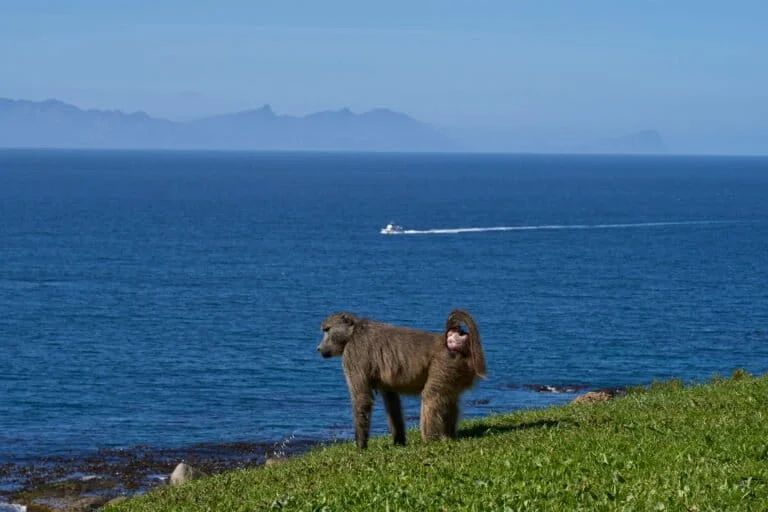
CAPE TOWN, South Africa — Recently, an influx of chacma baboons (Papio ursinus) has been increasingly evident in Simon’s Town, a picturesque locale known for its stunning coastal views. The baboons, particularly from the 44-member Waterfall troop, have turned their attention towards the naval barracks situated in Simon’s Town, attracted by the abundant human food sources. It reflects a broader struggle where natural habitats are encroached upon by urban expansion, pushing wildlife into human-dominated areas. This conflict often results in increasingly bold behavior from the animals seeking food, drawing attention to a complex human-wildlife interaction that’s not exclusive to South Africa.
The Role of Monitors
On a busy June morning, a baboon monitor equipped with a paintball gun came face-to-face with the ongoing challenge of managing a wildlife troop. As he observed the Waterfall troop’s descent, a vehicle from the NGO "Shark Spotters" arrived, equipped to assist in managing the situation. Yet, despite their combined efforts, including an array of deterrents, the baboons continued their disruptive antics for roughly 45 minutes. The situation revealed a profound difficulty in controlling these agile creatures, who easily scaled trees and buildings. Even more concerning was their boldness: they managed to snatch a bag of cereal from an abandoned kitchen at the naval base. This incident serves not just as a nuisance but as emblematic of a deeper issue in wildlife management; the need to find effective ways to deter wildlife without causing harm.
Community Alerts and Local Response
The challenge posed by these baboon raids has led to a community-driven response that underscores the importance of public awareness. A WhatsApp group initiated by the Cape Baboon Partnership has become a vital communication tool for local residents. By providing timely updates on the troop's movements, it helps residents prepare for potential encounters with these increasingly opportunistic baboons. Between June 11 and July 11, reports indicated an alarming 25 documented incidents of raids on residential properties. This spike showcases a growing trend that’s likely to intensify if action isn’t taken. In light of these developments, Cape Town city officials are now weighing the option of relocating these baboons to minimize disturbances. This potential strategy highlights the tension between protecting wildlife and ensuring the safety and comfort of local residents.
Human-Wildlife Conflict: A Broader Context
The ongoing issues related to baboon interactions with humans in Simon’s Town reflect a broader situation that many cities worldwide are grappling with. Human-wildlife conflict often arises when urban development encroaches upon natural habitats, disrupting ecosystems and pushing animals to seek alternative food sources in human areas. This tendency isn't exclusive to baboons or South Africa; cities across the globe face similar challenges, whether it’s bears rummaging through dumpsters in the U.S., or monkeys raiding agricultural fields in India. Such situations often lead to a cycle of habituation, where wildlife becomes reliant on human food sources, further complicating the relationship between species.
Implications and Future Outlook
The implications of effectively addressing baboon raids extend beyond immediate management measures. If you're working in this space, you'll realize that the way officials and communities respond could set a precedent for wildlife management in urban areas. Successful intervention strategies may pave the way for coexistence policies that prioritize both animal welfare and human safety. This scenario also raises critical questions about the long-term viability of wildlife in urban settings. If relocation is pursued, it must be executed thoughtfully to avoid ecological repercussions—such as overcrowding and resource depletion—in the targeted areas where the baboons are moved.
And yet, the Cycle continues. Wildlife management needs balanced approaches not just to mitigate conflicts but also to educate communities about living alongside wildlife. As the situation in Simon’s Town evolves, it highlights the urgent need for sustainable solutions that consider both wildlife preservation and human habitation.



Discussion
Sign in to join the discussion.