For the first time, a homegrown NGO will co-manage a wildlife reserve in the DRC, enhancing local community engagement in conservation efforts.
New Era for Conservation in DRC
In a significant move for biodiversity management in the Democratic Republic of Congo (DRC), a local organization, Strong Roots Congo, will begin co-managing the Itombwe Nature Reserve alongside the Congolese Institute for the Conservation of Nature (ICCN). This unprecedented public-private partnership marks a milestone in conservation practices in the region.
This collaboration is more than just a contractual arrangement; it symbolizes a crucial shift in how conservation efforts are being approached in the DRC, where traditional top-down management strategies have often marginalized local populations. In this case, Strong Roots Congo's role highlights a growing recognition that successful conservation cannot happen without the active participation of communities that live in and around protected areas. How that looks in practice will be watched closely by conservationists worldwide.
Dominique Bikaba, founder of Strong Roots Congo, expressed his pride, stating, “It is an honor. I think the government chose us because they have observed the work we have done in the biodiversity corridor and the way we have put local communities at the center of conservation.” His comments underscore a vital perspective in environmental management: the integration of community involvement is essential. The troubled history of conservation in the DRC has often seen protected areas established at the expense of Indigenous populations. The current approach indicates a learning process—acknowledging past failures is often the first step toward building a more inclusive future.
Strong Roots Congo has already secured nearly 600,000 hectares (around 1.5 million acres) of community land to establish a conservation corridor linking Kahuzi-Biega National Park to Itombwe Nature Reserve. This isn’t just an arbitrary boundary; it's part of a strategic planning initiative aimed at ensuring wildlife can move freely between these critical habitats. The organization has ambitious plans to extend this corridor to 1 million hectares (approximately 2.5 million acres), which will not only facilitate the movement and survival of wildlife but will also empower local communities economically and socially. If you're working in this space, understanding the dynamics of these conservation corridors could be pivotal for future initiatives.
This development follows the DRC's adoption of a National Forest Policy aimed at recognizing the rights of Indigenous peoples and local communities in forest management. It represents a watershed moment, signifying a shift towards more equitable conservation practices that take into account the voices and needs of local populations. Rather than seeing conservation as something imposed from the outside, there's a growing recognition that local stewardship can be one of the most effective ways to manage biodiversity. Strong Roots Congo’s model is one that could offer valuable lessons for similar initiatives across Africa and beyond.
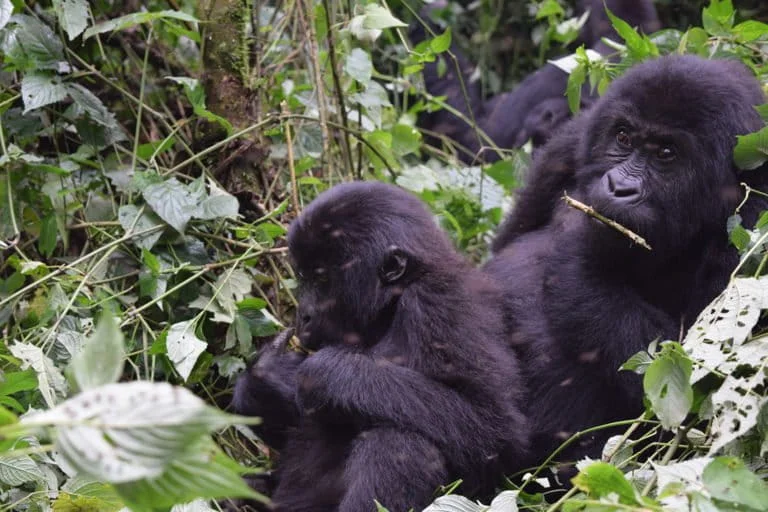
 Image courtesy of Strong Roots Congo. This article was originally published on Mongabay.
Implications for Future Conservation Efforts
The implications of this partnership extend beyond the immediate area. If successful, Strong Roots Congo’s approach may serve as a blueprint for conservation in similar contexts where marginalized communities have been historically excluded from decision-making processes. This strategy can offer a more sustainable way to balance human needs with environmental health, which is often easier said than done. Building trust with local populations is critical, especially in regions where conservation has been met with skepticism due to past mismanagement and land appropriation.
And yet, there are challenges ahead. Sustainable funding, continuous government support, and the active engagement of community members will all be vital to the success of this initiative. The reality is that many local organizations face obstacles that can hinder their operational capabilities, from financial constraints to political instability. Thus, while the DRC's National Forest Policy represents progress, the implementation of these principles on the ground is where the real test lies.
This is the part most people overlook: conservation isn't just about protecting ecosystems—it's about the people living within and around them. The growing trend of involving local communities in conservation is not merely altruistic; it's practical. Communities that see direct benefits from conservation efforts—be it through ecotourism, sustainable resource management, or direct employment—are more likely to be invested in the success of these projects. By aligning the interests of conservation with those of local populations, there’s a better chance for lasting impact.
In sum, Strong Roots Congo's partnership with ICCN could herald a new era not just for the DRC, but for conservation practices in areas worldwide where the coexistence of humans and wildlife is fraught with tension. While hurdles remain, this approach is set to ignite conversations around modifying conservation strategies to be more inclusive and community-driven—even as the outcomes remain to be seen.



Discussion
Sign in to join the discussion.