Women shellfish gatherers in Brazil unite against environmental degradation, asserting their rights to mangroves and cultural identity.
Guardians of the Mangroves
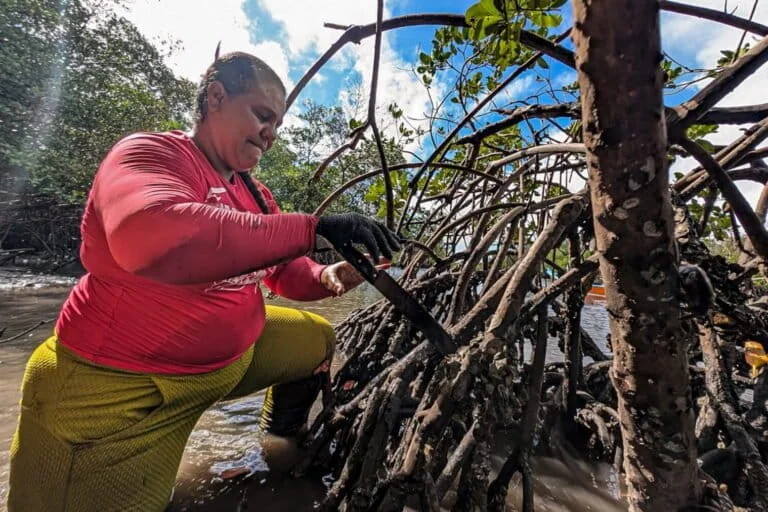
Adriana Hora dos Santos stands in the Vaza-Barris river, waist-deep in water, expertly extracting oysters from the mangrove roots. Clad in a pink Lycra shirt, she wields a machete about 40 centimeters long, striking a balance in her rhythm as she gathers. The distant skyline of Aracaju, the state capital of Sergipe, contrasts starkly with her natural surroundings, where the sounds of water and her powerful voice echo. This image of Santos doesn't just depict a moment in nature; it's a snapshot of a life deeply intertwined with the swirling tides of both ecosystem and economy. Santos, like many others in her community, relies on these mangroves not only for sustenance but as a vital part of her cultural identity.
An Anthem of Resistance
While she works, Santos sings an empowering anthem for the Movement of Women Shellfish Gatherers of Sergipe (MMS), a grassroots organization dedicated to protecting both their environment and cultural heritage. "I am a shellfish gatherer / Queen of the mangrove, I am a warrior," she proclaims. Her lyrics speak not just of personal struggle but of collective resilience as these women fight environmental degradation that threatens their livelihoods and identity. This isn't merely music; it’s a unifying force that mobilizes their fight against damage wrought by pollution and climate change, which imperil their access to vital resources. Every note sung echoes the urgency behind their mission to safeguard mangrove ecosystems not just for their generation but for future ones, too.
Community and Commitment
The MMS embodies a united front; Santos emphasizes their communal identity by saying, "We are always in a flock." By standing together, these women advocate not only for their access to the mangroves but also for the preservation of their way of life. Their determination signifies a larger battle against the socio-environmental challenges they face, reinforcing the importance of their role as custodians of the mangrove ecosystem. Each gathering and protest acts as a testament to the strength found in community ties. They’re not just fighting for shells and fish; they’re champions for sustainable practices and environmental stewardship. This collective spirit manifests in various approaches, from educational programs to direct lobbying of local officials to enact change.
The Broader Environmental Context
It's essential to understand that the challenges these women face go beyond their small community. Mangroves are critical ecosystems, providing a home to countless species while also acting as natural barriers against coastal erosion. However, they’re disappearing at alarming rates due to deforestation, urbanization, and pollution, often driven by industries that see short-term financial gain rather than long-term ecological health. This backdrop plays a pivotal role in the MMS's activism. Their fight is illustrative of a much larger struggle faced by Indigenous and local communities across the world, where natural resources are exploited in the name of progress, leaving behind communities that relied on those ecosystems for survival.
The Stakes of Preservation
The women of the MMS aren't just defenders of their own cultural heritage; they represent a broader movement against the forces of environmental degradation. As they sing anthems of resistance, they highlight the immediate risks to their livelihoods and the long-term implications for biodiversity. Environmental degradation has far-reaching effects that extend beyond the local ecosystem—impacting climate regulation, global carbon cycles, and even ocean health. And here's the thing: if these mangroves decline, we might see a drop in fish populations, affecting both local economies and food security. The stakes can't be overstated. Protecting these natural resources isn’t just about today—it’s about tomorrow.
Future Outlook and Implications
Looking ahead, the trajectory of the MMS and the health of the mangroves they protect will hinge on several factors. With increasing awareness around climate issues, grassroots movements like theirs are gaining traction not just locally but globally. Policy changes are slow, often inhibited by bureaucratic inertia and competing commercial interests. Yet, these women persist, showing that local action can lead to significant shifts in environmental policies. If you’re working in this space, the fight these women are waging offers a poignant example of how community dynamics can influence policy change, potentially becoming a model for other communities facing similar challenges. The world will be watching—if they can succeed in preserving their mangroves, it could inspire broader initiatives elsewhere.
The resilience of these women, embodied by Santos and her fellow gatherers, represents more than just a cultural or environmental battle; it’s a testament to the strength of human connection with nature. As the climate continues to shift, and as coastal ecosystems become ever more threatened, the lessons from the Movement of Women Shellfish Gatherers of Sergipe will be pivotal in shaping future responses to environmental crises.



Discussion
Sign in to join the discussion.