A dusky shark named Bukangi draws large crowds in Busan, highlighting concerns over environmental changes as locals rally to support her.
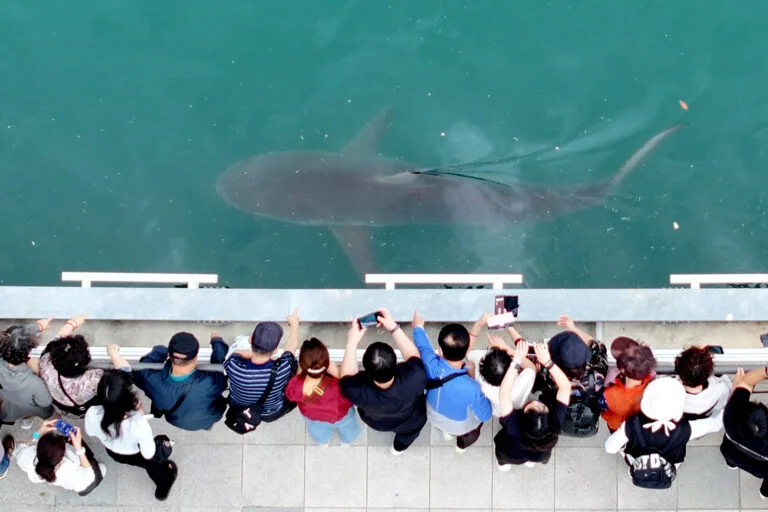
Introducing Bukangi: An Unlikely Local Icon
In the heart of Busan, South Korea's second-largest city, a dusky shark named Bukangi has caught the attention of locals and visitors alike. Since her sighting in mid-September, she has drawn nearly 1.4 million people to the area surrounding her confined space—a shallow canal amid towering skyscrapers and busy ferry routes. It's a scenario most would never expect: a 3-meter (10-foot) shark navigating urban life, yet that's exactly what Bukangi is doing. The sheer number of visitors she's attracted speaks volumes about her impact on public interest.
This situation reflects not only the fascination people have with wildlife but also their growing awareness of environmental issues faced by marine life. What was initially a local curiosity has transformed into a significant moment for the city, shining a light on the complex relationship between urbanization and nature. While many enjoy watching the shark's antics through viral videos, the deeper implications of her presence are far more troubling. Bukangi is a symbol, albeit an unlikely one, of the fragility of marine ecosystems in urbanized areas.
A Species in Peril
Bukangi is marked as endangered on the IUCN Red List, which raises alarms about her health and future. Sharks often symbolize the health of the ocean, serving as indicators of overall marine well-being. When a species like the dusky shark finds itself in a situation like Bukangi's, it typically signifies larger environmental issues at play. Urban canals, typically devoid of the rich biodiversity found in open oceans, cannot support larger marine animals, making her presence a cause for concern.
There have been two attempts to guide Bukangi back to the ocean, both of which have sadly failed. These efforts speak to a broader issue of how wildlife is managed when it encroaches into human-dominated spaces. In Bukangi’s case, her return to the open waters would likely mean facing various risks, from pollution to entrapment in man-made structures. And yet, many people remain hopeful. This sense of optimism sometimes clouds the more pressing questions—what should be done about her habitat, and how can we prevent similar situations from arising in the future?
An Urban Concern with Community Support
Since her arrival in the canal, Bukangi has garnered support from the local community, which has taken to referring to her as an "honorary ambassador." This nicknamed title indicates the emotional attachment locals have formed with the shark, showcasing a remarkable phenomenon: people are rallying around her welfare. The sheer number of workers—over 100—assigned daily to monitor her health reveals a collective concern and responsibility. It raises an interesting discussion: should communities take ownership of wildlife conservation, especially when the animals are struggling in urban environments? This is particularly pertinent in a city like Busan, where urban sprawl continues to change natural habitats.
Local businesses have not only recognized her as a tourist attraction but also embraced her as part of a marketing strategy. The city’s baseball team released merchandise inspired by Bukangi, and a nearby distillery even went as far as labeling its soju bottles in her honor. These actions, while endearing, reflect a dual-edged sword. On one hand, they create economic activity and raise awareness about marine issues; but on the other, they risk commodifying the shark's vulnerability. Are businesses truly invested in her well-being, or is this a case of opportunism?
Wider Implications: A Call for Change
The affection for Bukangi has brought broader environmental concerns to the forefront, driving conversations about the deteriorating conditions of marine habitats. Marine experts are vocal about their apprehension regarding her long-term survival. While many are captivated by the spectacle, here's the thing: Bukangi's predicament underscores the consequences of human actions on marine ecosystems. Her case serves as a microcosm of the complexities of conservation today. Are we merely spectators rather than stakeholders in the battle for these endangered species?
This situation invites a larger discussion about sustainability and urban development. If you're working in this space, the attention Bukangi has garnered might serve as a critical reminder. Urban areas often encroach upon natural habitats, leading to wildlife displacement. The emotional connection formed with Bukangi may drive public sentiment, but it begs the question: what systemic changes need to come from this grassroots awareness?
The rising interest in Bukangi could spur debates around policies aimed at protecting urban wildlife. To create a lasting impact, we need to address the root causes of habitat loss. It's not enough just to rescue creatures like Bukangi; we have to reevaluate how we construct our cities, what we prioritize, and take a hard look at our relationship with the environment. Overcoming this challenge requires collective effort and vision.
(And this is the part most people overlook) — real change starts at the local level, with enough public momentum to influence policy. Bukangi’s story isn't just a local phenomenon; it resonates globally among conservationists advocating for marine protections. What this means for you and every observer is that your voice matters. If the affection for a single shark can bring awareness to larger ecological issues, imagine the possibilities when we extend this sentiment toward other endangered species or conservation initiatives.



Discussion
Sign in to join the discussion.