At a regional hearing in Panama, representatives from six countries raised concerns about alleged impacts tied to Canadian mining operations, including water pollution in Ecuador.
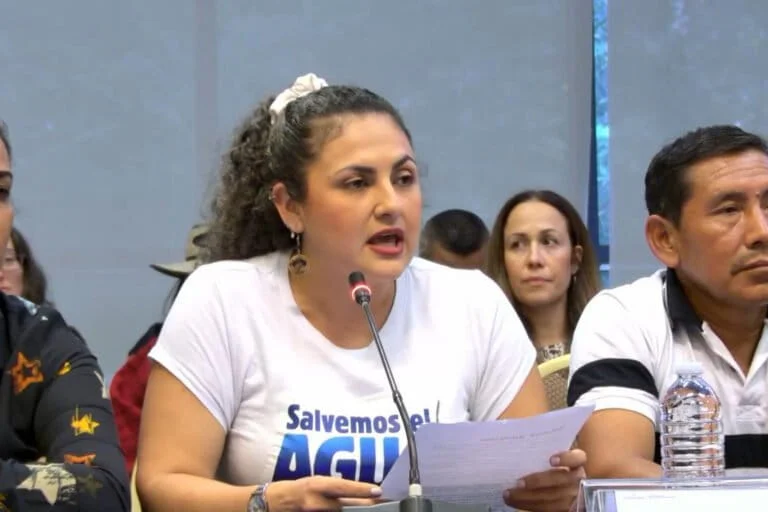
The testimony of an Indigenous fish-farmer from Ecuador put a local cost at the center of a regional hearing on Canadian mining operations: alleged damage to water, forests and livelihoods. On Oct. 27, representatives from six countries told the Inter-American Commission on Human Rights about harms they linked to Canadian companies, including four alleged attacks on environmental defenders. Their accounts raised a question that reaches beyond any single mine: when a company is based in one country and its operations affect communities in another, where can people seek accountability?
These were allegations presented to a hearing, not findings described in the account. That distinction matters. The commission’s role in convening testimony gives affected communities a forum to put their concerns on record, while the claims themselves still require scrutiny and response. The human stakes, however, are immediate for people whose work and daily needs depend on the land and water at issue.
For communities facing extractive projects, environmental harm can also mean economic disruption. A change in water quality or forest cover may affect the resources people rely on, even when the consequences are difficult to capture in a company statement or a hearing summary. The central tension in Manobanda’s testimony is plain: a mine’s economic activity can be weighed against the costs borne by residents who say their livelihoods depend on the surrounding environment.
One community’s concerns about El Domo
Marco Manobanda, from Las Naves, Ecuador, said the El Domo copper and gold mine is contributing to deforestation and water contamination near his home. The mine is owned by Vancouver-based Silvercorp Metals Inc. and Salazar Resources Ltd. His account connects those environmental concerns to the practical question of how local residents can continue earning a living if the land and water they depend on become less usable.
“If this mining continues, they’re going to keep polluting our water, and we’ll run out of resources. And since we make our living from that land and its resources, where are we supposed to go?” he said.
The question is direct because the consequences he describes are direct: lost access to resources could mean lost income and a threat to a community’s ability to remain in place. This is more significant than it looks. Environmental disputes around mines are often described in terms of permits, monitoring and project operations; Manobanda’s testimony puts household survival at the center of the debate. That doesn’t establish the cause or scale of the alleged damage, but it makes clear what residents say is at stake.
Canada’s overseas mining record under scrutiny
The commission convened in Panama to examine Canada’s responsibilities for the overseas human rights and environmental impacts of its extractive companies. About half of the world’s publicly listed mining and mineral exploration companies are based in Canada, with operations at home and abroad. That concentration gives the hearing a wider significance: the question is not only what happens at one site, but how communities can challenge alleged harms when the companies involved are headquartered elsewhere.
The hearing adds to long-standing concerns about the conduct of Canadian mining firms overseas. Representatives from six countries described harms they linked to Canadian companies, including four alleged attacks on environmental defenders. The reports of attacks heighten the stakes because people who speak publicly about environmental concerns may face risks beyond the loss of land or income. The hearing account doesn’t identify the details of those cases, so their circumstances and outcomes can’t be assessed here.
Here’s the thing: a public hearing can make testimony visible, but visibility alone doesn’t resolve a dispute or provide a remedy. For communities, the practical value of an international forum depends in part on whether their accounts lead to meaningful follow-up. And yet, putting testimony on the record can still matter, particularly when allegations concern companies operating across borders and local routes to accountability are contested.
What avenues remain for communities?
Advocates say options for seeking redress have narrowed since Canada eliminated the Canadian Ombudsperson for Responsible Enterprise about four months earlier. The office had been created to investigate complaints involving alleged human rights abuses and environmental harm by Canadian companies operating abroad in the garment, mining, and oil and gas sectors. Its removal raises a concrete question for affected communities: what avenues remain when alleged harms are tied to companies based in Canada?
The account doesn’t describe what mechanisms are available now or what steps complainants have taken through other channels. That gap matters. A hearing can bring attention to concerns, but people seeking redress need to know whether there’s a process that can examine evidence, hear from the companies involved and address harm. If you’re working in this space, the challenge is to distinguish public attention from an actual path to remedy.
For now, the testimony leaves two linked issues in view: how to assess the alleged environmental and human rights impacts, and how affected communities can pursue accountability across borders. The answers will depend on evidence and on the avenues available to those bringing complaints. The unresolved question is the one Manobanda asked in human terms: if the resources people rely on are threatened, where are they supposed to go?
This article was originally published on Mongabay.



Discussion
Sign in to join the discussion.