Two Tacuru employees were suspended after allegedly threatening Guarani-Kaiowá water supplies; activists say the response falls short.
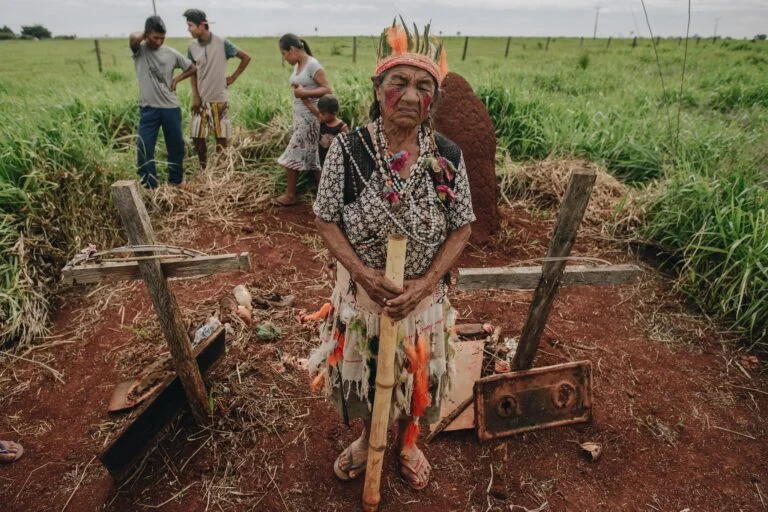
The alleged threat to poison water used by the Guarani-Kaiowá has drawn scrutiny in Tacuru, a municipality in Brazil’s Mato Grosso do Sul state. Indigenous advocates say the case reflects a pattern of violence that a temporary suspension may not address. The allegation is serious on its face: it concerns a basic resource, names an Indigenous community as a target, and was reportedly made by people employed by the municipality. The available account doesn’t establish that anyone acted on the threat or that water was contaminated. But the gap between a threat and an attack doesn’t make the words inconsequential.
After Luiz Inácio Lula da Silva won reelection on Oct. 25, two municipal employees allegedly sent WhatsApp audio messages claiming only Indigenous people had voted for him. The messages included a call to put poison in the water and “kill those pests,” according to reports shared by the Articulation of Indigenous Peoples of Brazil (APIB) on social media and sent to the Ministry of Indigenous Peoples. The reported political grievance matters as context, but it doesn’t soften the threat: the alleged language turned a community’s supposed voting behavior into a justification for violence. That is a stark escalation from political disagreement to an attack on people’s safety.
Investigation and response
The Federal Police and the Federal Public Ministry (MPF) are investigating. Tacuru’s city government suspended the employees for 20 days and opened administrative disciplinary proceedings, the MPF told Mongabay. These are separate tracks: the police and federal prosecutors are investigating the alleged threat, while the municipal process addresses the employees’ conduct as public servants. The account doesn’t say what evidence investigators have gathered, whether the employees have responded, or what outcome either process may produce. Those limits matter; the allegations remain under investigation.
A 20-day suspension is a prompt administrative measure, but its duration alone can’t establish whether the response is adequate. The disciplinary proceedings may clarify what the city considers a breach of its employees’ duties and what consequences it can impose. The federal investigation, meanwhile, will have to assess the alleged messages and their circumstances. Each process answers a different question, and neither outcome is described in the available information.
Matias Benno Rempel, coordinator of the state’s Indigenous Missionary Council (Cimi), said threats to poison water in Mato Grosso do Sul are more than hateful rhetoric. He pointed to past instances in which poisoning has been used against Indigenous communities in the state. His statement gives the allegation a local history, though the account doesn’t identify those past instances or provide details about them. That distinction is important: the broader concern is grounded in an advocate’s account, while the specific allegation in Tacuru is still being investigated.
Activists argue the suspensions are not enough to end or curb violence against Indigenous people. Their criticism reaches beyond the length of a workplace penalty. If threats are treated only as an internal personnel issue, a community may reasonably ask whether its safety concerns are being addressed; if the response includes credible investigation and follow-through, the public will be able to judge that against the facts as they emerge. Here’s the thing: a suspension can signal that an employer takes alleged conduct seriously, but it can’t by itself establish what happened or prevent future harm.
Why the response matters
Threats involving water carry a distinct weight because water is necessary for everyday life and community health. A threat to poison it can create fear even when there’s no evidence in the account that contamination occurred. (And this is the part most people overlook.) The harm under discussion isn’t limited to a completed act; a credible threat can unsettle people’s sense of safety and force them to consider whether an essential resource is secure. That’s why clear communication about what officials are investigating can matter alongside formal discipline.
The reported messages also raise a question about the responsibilities attached to public employment. Municipal workers speak as individuals, but allegations that they used violent language against Indigenous residents can affect how those residents view local institutions. The account doesn’t say whether the messages were sent in an official capacity or to whom they were addressed. Still, the city’s decision to suspend the employees and open proceedings places their conduct within an institutional process, where the allegations can be examined and answered.
This is more significant than it looks. The case now tests whether disciplinary measures can answer a threat that Indigenous advocates describe as part of a wider, recurring danger. A 20-day suspension is a temporary step; the investigation and disciplinary proceedings will determine what comes next, based on evidence not provided in this account. The central question is whether the response will address the specific allegation while giving Indigenous residents reason to trust that threats against them are taken seriously. If you’re working in this space, the distinction between a rapid personnel action and a lasting answer is hard to miss.
The public record described so far is limited: the alleged messages, the reported call for violence, the investigations, and the city’s immediate employment response. It doesn’t settle the allegations or establish what protections, if any, were put in place for the community. That said, the case has already drawn attention to a difficult measure of accountability: whether authorities can respond to a threat in a way that is both grounded in evidence and meaningful to the people it targets. Not a final answer.
This article was originally published on Mongabay



Discussion
Sign in to join the discussion.