Conservationists are urgently working to save orangutans from a devastated peat-swamp forest within a certified palm oil concession in Indonesia.
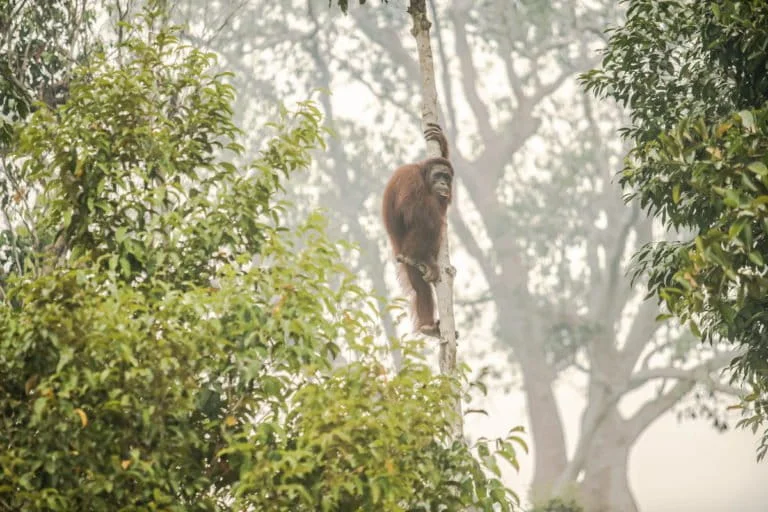
In West Kalimantan, conservationists face a race against time to save orangutans from a burning peat-swamp forest within an RSPO-certified oil palm concession. Smoke continues to fill the air as the ground remains perilously hot, threatening the habitat of around 60 Bornean orangutans (Pongo pygmaeus), one of the three species of orangutans unique to Borneo.
Understanding the Ecological Significance of Peat-Swamp Forests
Peat-swamp forests are among the most biodiverse ecosystems on our planet, acting as crucial carbon sinks. They play a significant role in regulating global climate conditions by storing carbon and maintaining hydrology. In places like Borneo, these forests are not only vital for wildlife, such as orangutans but also serve indigenous communities that rely on their resources for survival.
Orangutans, particularly the Bornean species, are integral to the ecosystem as they aid in seed dispersion, which is critical for forest regeneration. However, these forests are increasingly under threat due to agricultural activities, including the expansion of oil palm plantations. The RSPO (Roundtable on Sustainable Palm Oil) certification aims to promote sustainable practices in palm oil production, yet the current situation in West Kalimantan raises questions about the effectiveness of such certifications when fires and land-clearing continue to endanger sensitive habitats.
The Current Crisis in West Kalimantan
This 657-hectare (1,623-acre) forest is designated as a High Conservation Value (HCV) area within PT Kayung Agro Lestari (KAL). This designation indicates the environmental significance of the land, yet it remains vulnerable to destructive practices. The juxtaposition of being located within an HCV region and still facing threats from fires demonstrates a troubling inconsistency in conservation efforts versus corporate practices.
What's particularly alarming is that this section of the forest was previously utilized in 2015 to reintroduce four rescued orangutans by Yayasan International Animal Rescue Indonesia (YIARI), a Borneo-based NGO dedicated to promoting sustainable orangutan populations. Such initiatives are commendable but, unfortunately, they reveal a cycle of temporary success overshadowed by long-term risk. Behind the headlines celebrating conservation successes lies a sobering reality: habitat destruction continues largely unchecked, exacerbating the plight of these great apes.
Sadly, after nearly a decade, satellite imagery from the consultancy TheTreeMap confirms that much of this vital habitat has now been heavily impacted by fire. Monitoring ecosystems via satellite technology is becoming increasingly common, providing invaluable data for conservationists. However, this data also reveals how quickly species can lose their homes when proactive measures fail, and it serves as a stark reminder of the challenges ahead.
The Nature and Extent of the Fires
Analysis indicates that one of the major fire outbreaks started on August 8 near a canal bordering the plantation. This detail is particularly crucial, as canals are often dug to drain peatlands for agricultural use, making them exceptionally vulnerable to fires. The arid conditions also render the ground ripe for combustion since peat is highly flammable when dried out. Fires can devastate vast areas in a matter of days, and a fire like this one can escalate rapidly, as observed in the HCV forest.
As the fire spread westward into the HCV forest, the progression has been alarmingly evident. An animation shows the dramatic shift in the landscape from dark green, symbolizing healthy forest, to dark red, indicating the extent of the destruction from August 8 to September 12, 2026. Visual representations like these can raise public awareness but often lack the immediacy that spurs urgent action. As rescuers continue their efforts, the survival of the remaining orangutans in the area hangs in the balance.
Implications for Conservation and Future Outlook
What does this mean for the conservation community and, more importantly, for the orangutans themselves? The situation in West Kalimantan underscores a significant tension between economic interests and environmental conservation. It raises questions about the effectiveness of current methods for protecting endangered species and their habitats.
Conservationists may need to advocate for stricter regulations governing land use in High Conservation Value areas. If measures are not implemented to ensure protection, future generations may only read about orangutans in history books. There’s an overlooked risk that continuous habitat destruction could lead to the reclassification of species, impacting biodiversity on a broader scale. And this is the part most people overlook: the loss of even a single species has ripple effects throughout the ecosystem.
The fight against climate change and habitat destruction is complex, and the success of initiatives like the RSPO hinges on genuine commitment to sustainability, not just marketing. Stakeholders, including local governments, NGOs, and corporations, must prioritize conservation as part of their operational mandates. Partnerships based on transparency and shared goals could offer pathways toward safeguarding what's left of Borneo’s irreplaceable forests.
In a time where crises like these seem recurrent, the urgency is palpable. Conservation efforts must adapt quickly and decisively, leveraging community engagement, technology, and policy advocacy to protect remaining habitats. As the world watches, how this fire situation is resolved could set a precedent for conservation strategies in similarly vulnerable areas. If you’re working in this space, consider how public engagement can shift corporate and governmental obligations towards more meaningful actions.


Discussion
Sign in to join the discussion.