A recent report reveals a significant drop in global hard coral cover as marine heat waves intensify, reducing recovery time for reefs.
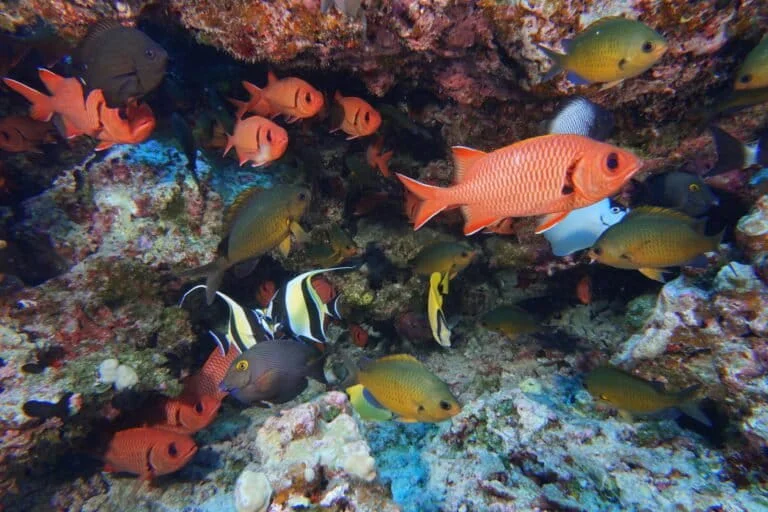
The State of Coral Reefs: A Growing Concern
The latest global assessment conducted by the Global Coral Reef Monitoring Network (GCRMN) reveals alarming declines in hard coral cover and the crucial recovery periods for coral reefs. Published on August 31, the report, titled “Status of Coral Reefs of the World: 2025,” incorporates an extensive dataset of 21.1 million observations collected from 87,299 surveys across 36,886 sites in 123 reef-bearing regions between 1980 and 2024.
This is more significant than it looks. Coral reefs are often referred to as the "rainforests of the ocean" due to their incredible biodiversity and their role in marine ecosystems. They support approximately a quarter of all marine species, even though they occupy less than 1% of the ocean's surface. The impact of coral decline isn't isolated to the marine life that calls these reefs home; it also significantly affects coastal communities that rely on these ecosystems for livelihood, tourism, and natural protection from storms.
Dramatic Declines in Hard Coral Coverage
According to the findings, global hard coral cover has decreased from an average of 30.2% during the 1980-2009 period to just 27.3% from 2020 to 2024. This 9.5% decline signifies a loss of 2.9 percentage points. The assessment describes this as a conservative estimation, noting that monitoring began after many reefs had already been adversely affected, and data coverage varies significantly by region.
If you're working in this space, the implications are staggering. A significant decline in hard coral can worsen the health of entire marine ecosystems, leading to decreased fish populations, diminished biodiversity, and further vulnerabilities for species with complex life cycles dependent on coral reefs. The alarm raised by these statistics reflects a troubling trend not just for marine biodiversity but also for the extensive human economies that depend on healthy coral systems.
Understanding Coral Reefs’ Role
Hard corals are vital as ecosystem engineers; they form the backbone of reef systems. Their structures provide habitats not only for fish but also for many invertebrates and other marine life, setting up a web of interdependence that ensures ecological stability. The assessment emphasizes the focus on hard corals due to their role, measurable attributes, and the consistency of global monitoring, allowing for regional and temporal comparisons.
This monitoring serves as a tool for conservation efforts. Long-term datasets like the one used in the GCRMN report can assist in pinpointing the successes and failures of marine policies, offering tailored solutions suited to specific environmental contexts. However, the urgency becomes clear: slowing the pace of coral decline requires immediate and effective action that can adapt to the fast changes often seen in oceanic conditions.
Impact of Climate Change and Bleaching Events
Compounding these challenges, the period from April 2023 to mid-2025 saw coral reefs experience their fourth global bleaching event, intensifying concerns for the future health of these vital ecosystems. Coral bleaching is primarily associated with elevated sea temperatures, a trend exacerbated by climate change. This event underscores the increasing severity and frequency of extreme weather patterns and temperature fluctuations that reefs face.
That said, while coral can recover from bleaching events given enough time, this longevity is threatened by repeated stressors — further reducing resilience. The cyclical nature of these stressors means that if immediate action isn't taken, recovery periods will stretch longer, leaving reefs increasingly vulnerable to damage. The interplay between temperature, ocean acidification, and other anthropogenic effects makes this an urgent issue for scientists and policymakers alike.
The Monitoring Landscape
The GCRMN’s assessment is one of the most detailed collections of coral reef health data available. The vast dataset of over 21 million observations is a testament to the concerted efforts to monitor these ecosystems, but it also highlights the temporal and regional variations that must be addressed. Not every region experiences coral loss at the same rate, and knowing where recovery efforts will be most effective requires localized data.
In a connected world, technology can play a significant role in the future of coral monitoring. Remote sensing, drones, and artificial intelligence are just a few tools that can enhance data collection and analysis related to coral health. This is critical, as the more accurately we can monitor and respond to the status of coral reefs, the better we can direct conservation efforts effectively.
Implications and Future Outlook
The implications of this report extend far beyond the scope of marine biology. The alarming decline in coral health reflects the broader impacts of climate change and environmental degradation, resulting in global outreach efforts that blend marine conservation with systemic shifts in human behavior. It is essential to integrate community efforts and sustainable practices to address root causes, particularly how societies approach and mitigate climate change.
Here’s the thing: unless global leaders commit to more aggressive climate policies and ecological protections, the statistics will only worsen. The drop in hard coral cover being described as a 'conservative estimation' already signals that reefs may be in worse condition than depicted. Effective initiatives, public education campaigns, and collaboration between governments, NGOs, and local communities are vital to making any progress in coral restoration.
What this means for you as a stakeholder or observer in this arena is that continuing updates and assessments from organizations like the GCRMN will play an instrumental role in guiding future conservation efforts. Awareness of ongoing threats is a stepping stone toward restoring and protecting these critical ecosystems before they reach a tipping point from which recovery may be impossible.
Photo by Andrew Gray/NOAA via Flickr (Free to use).



Discussion
Sign in to join the discussion.