A new study highlights critical nesting habitats of the Philippine eagle, revealing substantial overlap with mining concessions and habitat loss.
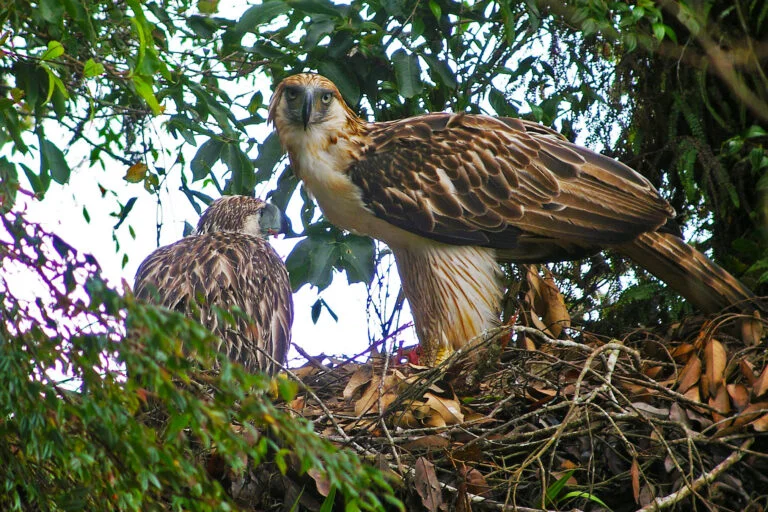
Critical Habitat Threats for the Philippine Eagle
A recent assessment identifying potential nesting sites for the Philippine eagle underscores the ongoing risk of habitat loss for this critically endangered species. This study, released in Bird Conservation International, reveals that significant areas of suitable nesting habitats overlap with mining concessions—41% of the prime habitats and 65% of essential core areas, particularly in eastern Mindanao, the Philippines’ second-largest island. The implications of this overlap are worrisome, as these mining activities not only threaten the physical environment of the eagle’s habitat but also the ecosystem services that support a diverse range of flora and fauna.
This issue isn't just about the Philippine eagle; it's reflective of a broader conflict between conservation efforts and economic pursuits. Mindanao is rich in natural resources, and that wealth has attracted mining operations, often clashing with environmental preservation efforts. This makes the struggle of the Philippine eagle emblematic of the complex balance that must be struck between ecological integrity and economic development in many parts of the world. For local communities, the push for mining often means immediate economic benefits, but at what long-term cost? The question remains a pressing one.
Protected Areas and Indigenous Lands
Alarmingly, only about 35% of the highly suitable habitats mapped within the Eastern Mindanao Biodiversity Corridor are located within designated protected areas. Moreover, there’s noteworthy overlap, with 65% of the core high-quality nesting environments intersecting Indigenous ancestral domains. It's crucial to recognize that these percentages don't necessarily correlate to the same geographic zones, as the study clarifies. This means that many of the remaining habitats are outside protections and are subject to various land use pressures, including agriculture and illegal logging, complicating efforts to conserve this threatened species.
The reliance on Indigenous lands for potential eagle habitats raises another layer of complexity. Indigenous communities have long been stewards of their lands, and their traditional ecological knowledge can play a significant role in conservation efforts. However, their rights often clash with commercial interests, such as mining and logging. Preserving these habitats will require a collaborative approach that respects Indigenous rights while aligning conservation priorities. What this means for the Philippine eagle is profound: its survival depends not only on protecting habitats but also ensuring the legal and cultural sovereignty of these Indigenous communities.
User-Friendly Conservation Insights
Christopher J.W. McClure, co-author of the study and vice president for global science at The Peregrine Fund, highlighted the significance of turning nearly four decades of research—comprised of field observations, nest data, GPS tracking, and satellite imagery—into actionable insights. “This study helps pinpoint where surveys and protective measures are vital prior to habitat alterations,” McClure stated in a recent press release from the Philippine Eagle Foundation. This kind of actionable data is critical in the fight for conservation, as it allows stakeholders to make informed decisions about land use and habitat management.
For anyone interested in biodiversity and conservation, this reflects a key shift in how conservationists can approach intervention. The advancement of technology, coupled with comprehensive research, can lead to effective habitat management strategies. The challenge, however, remains in how these strategies are implemented on the ground, often involving navigating a web of local politics, economic pressures, and community sentiments. If you're working in this space, you'll know the realities can be much messier than ideal scenarios painted in reports.
Concerns from the Ornithological Community
Juan Carlos Gonzalez, an ornithologist from the Museum of Natural History at the University of the Philippines Los Baños, expressed concern about the findings, emphasizing the already limited suitable habitat available for Philippine eagles, especially within protected regions and Indigenous-managed forests. These areas are becoming the last strongholds for this species. The pressures they face from mining and land clearing could push them further toward extinction, making swift and decisive conservation action more urgent.
What stands out is the mismatch between conservation goals and economic development aspirations throughout the Philippines. The limited habitats that remain are being stretched thinner, and with more pressure coming from both legitimate and illicit land use developments, the situation becomes increasingly dire. It’s the kind of scenario where scientific warnings can easily be ignored in favor of short-term gains. (And this is the part most people overlook.) Protecting the Philippine eagle isn't just about saving a species; it's about maintaining ecological balance that can support numerous interconnected life forms.
Implications for the Future of Conservation
The findings from this assessment paint a stark picture that has implications extending beyond the Philippine eagle alone. The potential extinction of this apex predator could signify larger ecological disruptions, as its role in the ecosystem contributes to a broader biodiversity that many species rely on. The failure to act decisively in conservation today could result in losses that are irreversible by tomorrow.
Looking ahead, collaborators in conservation—including government bodies, NGOs, and local communities—will need to find means not just to secure habitats but to negotiate land uses that prioritize biodiversity without sacrificing the livelihoods of local people. The interface between conservation and economic development will require innovative solutions that consider the long-term health of ecosystems and the cultural values of Indigenous peoples. It’s a complex challenge, but without engagement and cooperation, the future for the Philippine eagle—and indeed many species worldwide—looks bleak.



Discussion
Sign in to join the discussion.