As Hong Kong's heat intensifies, outdoor workers face heightened health risks, prompting urgent calls for stronger protective measures.
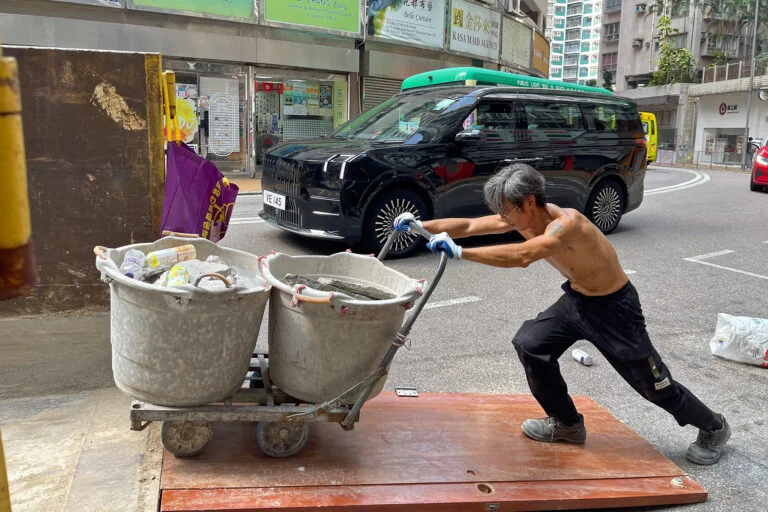
HONG KONG — On a recent mid-September morning, Wong Ping-kuong, a 74-year-old outdoor worker, diligently cleaned an outdoor staircase. Despite the early hour, the heat was palpable, with temperatures expected to peak at 31°C (87.8°F). With over fifty years in the construction and cleaning industry, Wong has witnessed firsthand the effects of rising temperatures due to climate change. He remarked, “It’s gotten hotter. Before, I didn’t sweat; now my back is often covered with sweat,” in a conversation with Mongabay.
Wong and his team consider themselves fortunate to have access to an air-conditioned truck for brief respites from the oppressive heat. However, the danger of heat-related illness lurks constantly, with symptoms like dizziness and heatstroke setting in quickly, often within just 10-15 minutes in extreme conditions.
Escalating Heat Wave Challenges
As Hong Kong grapples with extreme weather, outdoor workers like Wong are increasingly vulnerable to heat-related health issues. Data illustrates a troubling trend; the city is warming by nearly half a degree Celsius per decade, accompanied by longer summers. The number of "very hot days" has surged, quadrupling since the 2000s, according to the Hong Kong Observatory (HKO). This reflects a broader climate pattern affecting many urban centers worldwide, where global temperature rise disproportionately impacts those without the luxury of climate-controlled environments.
Outdoor professionals, especially in construction and maintenance, often face the brunt of these temperature rises. They're not just working in challenging conditions; they’re often under immense pressure to meet deadlines in physically demanding roles. The risk of heat stress becomes a ticking clock once temperatures hit certain thresholds. It's the kind of danger that should prompt serious public health discussions, yet discussions around worker safety often see little traction until after incidents occur.
Record High Temperatures
Alarmingly, on August 9, HKO recorded a staggering 36.9°C (98.4°F) at its main monitoring station, the highest since records began in 1884. Other areas in Hong Kong faced even more extreme temperatures, reaching 39.8°C (103.6°F) that same day. In light of these escalating conditions, there is a growing consensus advocating for enhanced regulations to protect outdoor laborers. But will these discussions lead to real change? Often, the loudest calls for action come only after a tragedy has struck.
The implications of these heat waves are dire, not just for workers like Wong but also for the broader community. When outdoor workers fall ill due to extreme heat, vital services can be disrupted. It's a domino effect. Lost productivity translates to potential economic downturns, not to mention the healthcare costs associated with treating heat-related illnesses. Countries with a high reliance on outdoor manual labor must confront this reality if they intend to withstand the rigors of climate change.
Regulatory Gaps and Worker Rights
If you're working in this space, it’s essential to recognize that current labor laws often lag behind the observable effects of climate change. Many countries, including those in Asia, face criticisms for inadequate protections for outdoor laborers. For instance, existing regulations may not fully address issues like mandatory breaks in extreme temperatures or the provision of cooling facilities. The fact that Wong's team has access to an air-conditioned truck is an exception, rather than the standard. Workers should not have to rely on good fortune for their safety.
And yet, while there is some momentum for regulatory reform, the pace of change can feel frustratingly slow. Proposals to require regular hydration breaks and access to cooling equipment have faced pushback from employers who argue that these measures reduce productivity. This illustrates a fundamental tension between business interests and worker health — a tension that's increasingly difficult to ignore as climate pressures mount. If employers feel the economic pinch, how will the workers at the bottom fare? The imbalance is stark.
Implications and Future Outlook
Let's face it: the situation is becoming increasingly untenable. With the risk of heat-related illness growing, the push for change must accelerate. It’s not just about policies; it’s about a shift in mindset regarding worker rights and safety in the face of climate adversity. Awareness campaigns could play a dual role in educating both employers and employees about the risks of heat exposure, fostering a culture where worker safety is prioritized.
The dialogue around outdoor labor in extreme heat isn’t just a labor issue; it touches on public health, economic stability, and climate resilience. As more people speak out about their personal experiences in oppressive conditions, the urgency for political action will likely rise. This dynamic could redefine labor regulations and result in stronger protections, but only if the momentum is maintained.
(And this is the part most people overlook) — without consistent advocacy and public pressure, changes may not fully materialize. It's critical that worker voices are amplified in these discussions; their firsthand accounts hold the key to understanding just how severe the consequences of climate change are on a human level. As we look to the future, the intersection of climate change, health risks, and labor rights will not just shape policies but also define the quality of life for millions.



Discussion
Sign in to join the discussion.