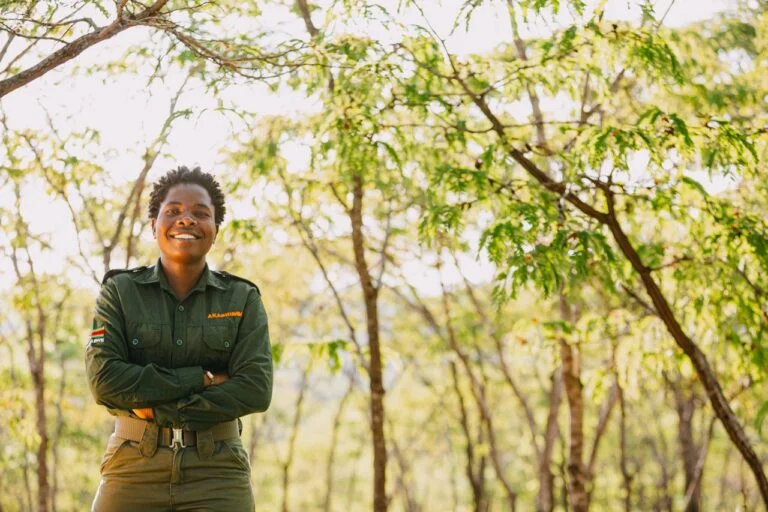
Nyaradzo Auxilia Hoto's transformative journey from rural poverty to leading wildlife protection showcases the impact of female empowerment in conservation.
From Adversity to Achievement
Nyaradzo Auxilia Hoto's experiences as a wildlife ranger reflect a significant shift in conservation efforts within Zimbabwe, a country rich in biodiversity yet challenged by socio-economic hurdles. Her story begins in Huyo, a rural community located in the Lower Zambezi Valley, where economic instability forced her family to depend on subsistence farming. This is not an uncommon narrative in regions where poverty runs deep and educational resources are scarce. Although she showed promise in academics, pursuing higher education seemed like a distant dream, prompting her to consider marriage as a potential escape from her economic hardships. Sadly, many women find themselves in similar situations, feeling trapped between societal expectations and their aspirations.
A Turning Point
However, the hope of finding a better life through marriage turned to anguish when she endured nearly four years of domestic abuse. This grim reality often goes unspoken in many cultures, where the stigma surrounding divorce can hinder women from reclaiming their autonomy. After mustering the strength to escape her violent marriage, Hoto returned to live with her parents and young daughter. It was in this moment of vulnerability that her life began to shift for the better. In 2017, the International Anti-Poaching Foundation introduced an initiative called Akashinga, designed to empower local women to take on the traditionally male role of wildlife ranger. Out of 100 applicants, Hoto’s determination and resilience led her to be selected as one of the 16 recruits.
Breaking Barriers
Joining a program aimed at empowering women in a male-dominated field is not without challenges. Hoto faced skepticism from many in her community, who were unsure about women taking on roles as wildlife rangers. Yet, she was undeterred. Her dedication and performance quickly spoke for themselves. Rising to the rank of ranger sergeant, she now leads patrols alongside her fellow women rangers. Her ascension to leadership isn’t merely about personal achievement; it represents a broader shift in societal attitudes towards women's roles in conservation. In fact, research shows that when women are included in conservation efforts, not only are the communities empowered, but the effectiveness of programs improves significantly. Moreover, Hoto's commitment to wildlife protection prompted her to return to school, ultimately earning a degree in wildlife, ecology, and conservation in 2023. Today, she serves as a biodiversity officer with Akashinga, focusing specifically on sustainable wildlife protection, a critical need as poaching and habitat loss threaten biodiversity.
In her role, Hoto doesn’t just contribute to the protection of wildlife; she also serves as a living example of the impact that female empowerment can create in conservation efforts. Her journey illustrates how adversity can transform into opportunities for profound personal and communal change.
Implications for the Future
Hoto's remarkable story underscores the potential that lies in empowering women, especially in fields where they have traditionally been excluded. As more women like Hoto enter conservation roles, they will challenge entrenched societal norms and inspire future generations. The significance of her journey extends beyond individual success; it invites broader discussions about the intersection of gender, poverty, and ecology. If you're working in this space, her story could serve as a blueprint for implementing similar initiatives in other regions struggling with conservation and gender equality issues.
And yet, while Hoto's achievements are inspiring, they also highlight a pressing question: how can communities ensure that these gains are sustainable? Tackling systemic issues such as gender-based violence and economic inequality requires a multi-faceted approach. It’s not enough for organizations to simply recruit women into traditional roles; there's an ongoing need for education, mentoring, and community buy-in. (and this is the part most people overlook) The change must be holistic, addressing not only the roles women occupy but the barriers they face in society at large.
In summary, Nyaradzo Auxilia Hoto’s journey represents not just personal growth but a pivotal moment for conservation practices in Zimbabwe. As the narrative around women in these roles evolves, one can only hope that this shift will inspire further efforts to integrate inclusiveness into conservation strategies worldwide.
Discussion
Sign in to join the discussion.