Australia’s kangaroos number up to 50 million, but smaller macropods face a far more precarious future amid climate pressures and extinctions.
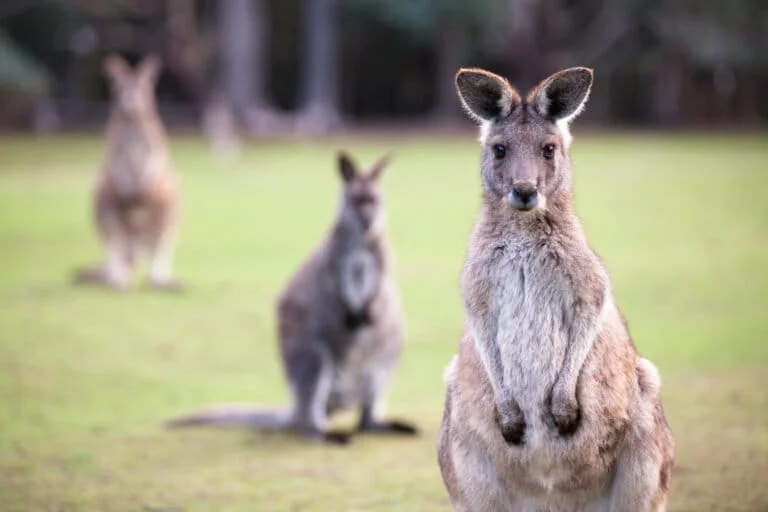
Australia’s macropods tell two very different conservation stories. The country’s four familiar kangaroo species remain abundant, while smaller relatives face severe declines and a history of extinctions. World Kangaroo Day, observed Oct. 24, offers a moment to consider those differences as climate change reshapes conditions for the animals and the ecosystems they inhabit. The contrast matters: a large total for a few well-known species can make the group look secure even when less familiar members are in trouble.
Australia has 59 species in the macropod superfamily. The best-known are the red kangaroo (Osphranter rufus), the largest; the western grey kangaroo (Macropus fuliginosus); the eastern grey kangaroo (Macropus giganteus); and the antilopine kangaroo (Osphranter antilopinus). Their combined population is estimated at 30 million to 50 million, with totals shifting alongside drought and rainfall cycles. Some state governments have introduced controversial culling programs, citing high numbers.
Those estimates describe a moving target. When rainfall and drought cycles shift, food and water conditions change too, affecting where kangaroos can live and how many are counted. A broad population range is therefore useful as a sign of scale, but it can't tell readers how any one species or local population is faring. Nor does abundance by itself settle the debate over culling: the source identifies high numbers as the governments’ stated rationale, while the programs remain controversial.
Here’s the thing: population totals are an easy headline, but they can flatten a complicated picture. A species that is common across parts of the country can coexist with relatives that occupy a smaller range or face sharper pressure. That difference changes what conservation success means. Protecting a familiar, numerous kangaroo and preventing a rare macropod from disappearing are distinct tasks, even though both animals belong to the same broad group.
Smaller relatives face steeper losses
The scale of those populations can obscure the plight of less familiar species. The musky rat-kangaroo (Hypsiprymnodon moschatus), the world’s smallest macropod, weighs about 500 grams (1.1 pounds). Gilbert’s potoroo (Potorous gilbertii) is critically endangered, while Lumholtz’s and Bennett’s tree-kangaroos (Dendrolagus lumholtzi and D. bennettianus) live in the forests of Far North Queensland.
The range of sizes and habitats in that short list is a reminder that “macropod” doesn't mean one animal with one set of needs. A tiny rat-kangaroo and a tree-dwelling kangaroo are part of the same superfamily, but their lives depend on different environments. That makes a single population figure a poor shorthand for the condition of all 59 species. For readers, the practical question is not simply how many kangaroos there are, but which species the count includes and what pressures each faces.
For smaller macropods such as quokkas, bettongs, potoroos and wallabies, the outlook is dire. Six kangaroo species have gone extinct since Australia’s colonization, and the source reports that 11 of the… The available article text cuts off at this point, so it doesn't identify what the figure refers to. That gap limits what can safely be concluded from the claim; it shouldn't be filled by guesswork.
Still, the stated contrast is clear. Large populations of familiar kangaroos haven't prevented extinctions among other members of the group, and they don't erase the concern around species described as facing severe declines. This is more significant than it looks: a public image built around abundant animals can make losses among smaller species easier to miss. And yet those less visible losses are part of the same conservation story.
Climate pressure and the limits of a headline count
The article connects these differences to climate change and points to a “super El Niño” in 2026 as a reason to focus on climate pressures. The source doesn't spell out the expected effects on individual species, so specific outcomes can't be inferred from it. In general, however, wildlife affected by changing rainfall and drought conditions may face changing access to food, water and suitable habitat. The consequences will vary across species and places.
That variation is why the big population estimate needs context. A national total can say that the four familiar species remain numerous; it can't, on its own, show whether smaller relatives are holding on or whether conditions are changing in particular habitats. Climate pressure adds another reason to watch those distinctions. If you're working in this space, the useful signal is the species-level picture and how it shifts over time, not the reassurance of one large combined count (and this is the part most people overlook).
For the public, World Kangaroo Day is an opportunity to look past the emblematic animals and ask what else the label includes. The musky rat-kangaroo’s small size, Gilbert’s potoroo’s critically endangered status and the tree-kangaroos’ forest habitat point to very different conservation concerns. The article doesn't provide detailed population trends for those animals, but it does show why the familiar kangaroos can't stand in for every macropod.
What the contrast means
Australia’s macropods don't fit a single story of either abundance or decline. Some species are numerous, their counts move with rainfall and drought, and some governments cite high numbers when explaining culling programs. At the same time, smaller relatives face severe declines, and six kangaroo species have gone extinct since colonization. The split is the point.
Climate change makes the distinction more pressing, while the incomplete figure in the source leaves one part of the decline account unresolved. The available facts support a careful conclusion: broad totals can conceal species-level losses, and future attention needs to account for the different animals and habitats gathered under the macropod name. A large number. A much smaller margin for some species.
This article was originally published on Mongabay



Discussion
Sign in to join the discussion.