A study in southwestern Bangladesh finds that migration from climate hazards doesn’t guarantee safety for people settling in cities.
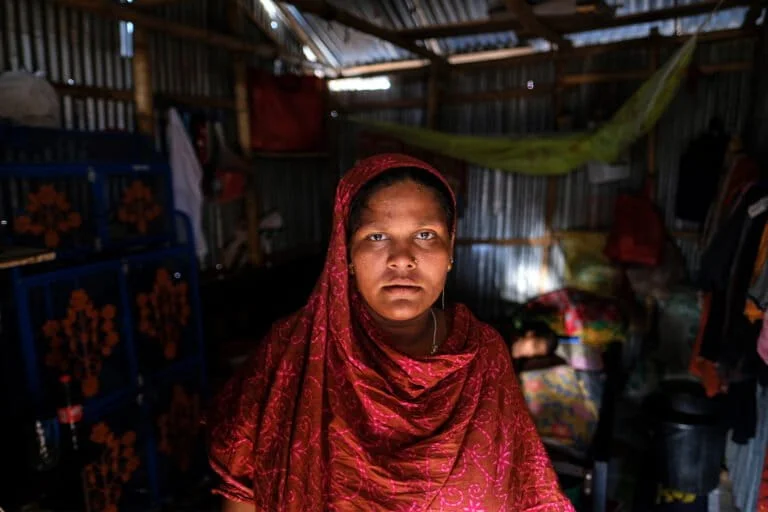
Moving to a city can take Bangladeshis away from floods, cyclones and river erosion, but it doesn’t necessarily put them somewhere safer. A study of climate migrants in informal settlements in southwestern Bangladesh finds that weak urban planning and social protection can leave people exposed after they relocate. That distinction matters: migration can change where a hazard strikes without resolving the conditions that made a household vulnerable in the first place. A safer address on paper may still mean insecure housing, limited support and little ability to recover when trouble comes.
Relocation can shift, not remove, risk
Informal settlements are often among the first places displaced people can reach. That accessibility can matter when a family needs somewhere to stay and has limited time or resources to make a move. But the same settlements may have structural conditions that expose residents to hazards. The study’s central concern is therefore not simply whether people leave areas affected by climate pressures, but what they encounter after arrival.
Urban risk is shaped by more than the presence of a flood, storm or other hazard. Housing quality, planning decisions and access to social protection can affect whether residents are exposed and how much harm they face. The source doesn’t detail the specific conditions found in each settlement, so it can’t support a more granular account of those risks. Its broader finding is still clear: moving into a city doesn’t automatically bring the planning or support that would make relocation safer.
That creates a difficult test for secondary cities. They’re receiving people who need housing and livelihoods, while the systems that shape urban growth may not be prepared to account for newcomers’ needs. If planning leaves informal settlements outside its practical reach, relocation can reproduce vulnerability in a new place. The city may offer distance from the hazards people fled, yet residents can remain exposed through the conditions in which they’re expected to live.
Displacement at a substantial scale
The scale of displacement is already substantial: disasters displaced 2.4 million people within Bangladesh in 2024. The International Monetary Fund has also projected that rising seas could erase more than one-seventh of the country’s land area and nearly one-third of its food production by 2050. These figures describe pressures that make the question of where people go more than a matter of individual choice. They also show why the quality of destination planning belongs in any serious discussion of climate adaptation.
Those projections don’t establish how many people will migrate to particular cities, or what any one household will face. They do signal the scale of the challenge the country may need to manage. When displacement is widespread, the receiving areas’ ability to provide safe housing and support becomes part of the adaptation problem itself. The study points to a gap between recognizing migration as a response to climate pressure and preparing cities to receive migrants well.
Migration needs a destination plan
Migration is often treated as a way to adapt to climate pressures, giving people a chance to leave hazard-prone areas and seek safer housing and steadier livelihoods. That framing captures a real possibility, but it can make relocation sound more complete than it is. A move changes a household’s location; it doesn’t by itself guarantee stable housing, work or assistance. Those outcomes depend partly on the conditions people find after they arrive.
The findings, published in Climate and Development, suggest that destination cities need to account for migrants’ needs in their planning and support systems. That means the measure of adaptation can’t stop at whether people have left an exposed region. It has to include whether the place they reach can support a safer, more stable life. The study’s summary doesn’t specify which policies would deliver that outcome, and it would be misleading to claim that one intervention alone could solve the problem.
Here's the thing: a city’s response to newcomers can influence whether relocation reduces vulnerability or merely changes its form. Planning and social protection aren’t side issues added after migration happens; they help determine what the move can achieve. This is more significant than it looks, because a strategy that counts departures but ignores conditions at the destination risks mistaking movement for safety.
And this is the part most people overlook: the people arriving in informal settlements aren’t only evidence of climate pressure. Their needs also test whether urban systems can respond to a changing population. If you're working in this space, the practical question is whether planning and support reach the residents most likely to be missed. The source points to that challenge without claiming that every migrant has the same experience or that every destination city faces identical conditions.
What safer relocation would require
The findings leave an important question for cities and policymakers: how should receiving areas make relocation safer in practice? The source identifies weak urban planning and social protection as problems, but doesn’t provide a detailed policy blueprint. At a minimum, the implication is that migrants’ housing and support needs must be considered as part of city planning, rather than treated as temporary concerns outside it.
That’s a demanding task. Cities need to consider not only the reasons people leave, but also what newcomers can access after they settle. Without that destination focus, climate migration can be described as adaptation even when the resulting living conditions remain precarious. A move may still be necessary, and it may bring benefits, but those benefits can’t be assumed from the fact of relocation alone.
Leaving an exposed region may be only the first step; the conditions people find after arrival will shape whether that move brings greater safety. The study’s warning is measured, but its implication is pointed: adaptation plans that treat cities as endpoints rather than places with their own vulnerabilities will miss part of the problem. A safer life depends on what happens after the journey, too.
This article was originally published on Mongabay



Discussion
Sign in to join the discussion.