Environmental groups say road work is damaging mangroves and forests, and want a court to halt the project and order ecological repairs.
A dispute over damage and certainty
Road work in Mexico’s Sian Ka’an Biosphere Reserve has already damaged mangroves, forest and water flows, environmental advocates say. They’re urging a court to halt the project and require repairs, arguing that an October statement from the environment ministry doesn’t give local communities the certainty a ruling would. The dispute therefore concerns both what happens next and how authorities address damage that advocates say has already occurred.
“We want certainty for the communities that, first, the project is canceled, and second, that they repair the damage already done,” Viridiana Maldonado, co-coordinator at the environmental NGO Territorios Diversos para la Vida, told Mongabay. “Because a good part of the project is already built, the damage is done.” Her remarks frame the requested court action as a demand for two distinct outcomes: stopping further construction and addressing past impacts. That distinction matters in infrastructure disputes, where a pause alone may leave communities uncertain about whether work will resume or whether earlier harm will be repaired.
Why the reserve’s ecology matters
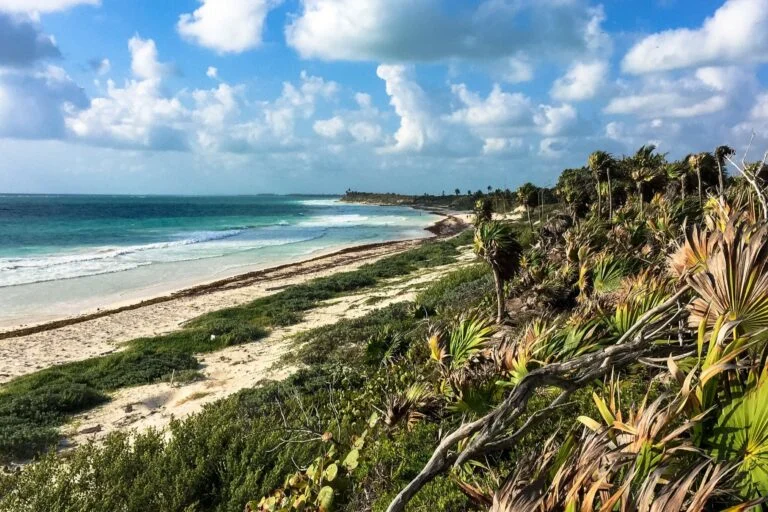
The reserve spans more than 528,000 hectares (1.3 million acres) of mangroves, rainforest and dunes in Quintana Roo, on Mexico’s Caribbean coast. UNESCO designated it a World Heritage site in 1987. It provides habitat for jaguars, Central American tapirs and hundreds of migratory bird species. Semarnat says the reserve also has 47 community-based tourism initiatives and 140 permits for tourism and recreational activities.
Those details show that Sian Ka’an is not a single-purpose protected area. Its ecological value sits alongside human activity, including tourism that depends on the reserve’s natural character. Roads can make places easier to reach, but construction in sensitive environments can also alter vegetation and the movement of water. Mangroves, forests and dunes each form part of the setting described in the source; damage to them raises questions about how infrastructure fits within the reserve and what effects may persist after building stops.
Water flows are especially relevant because they connect parts of an ecosystem that can otherwise look separate on a map. A road’s physical footprint may be visible, while changes to drainage or water movement can be harder to assess from a distance. The source doesn’t specify the precise mechanisms or extent of the reported changes, so those details remain contested or unreported here. But the advocates’ concern makes clear that their objection reaches beyond the cleared ground itself.
What the ministry statement does—and doesn’t—settle
The Puerta al Mar (“Door to the Sea”) project is under construction in the reserve. The ministry’s statement called for minimizing infrastructure development there, but environmental groups say road work continues. That gap between a general call to limit development and claims of ongoing work sits at the center of the present dispute. A statement can signal an official position, yet it may not answer the practical questions communities face about whether construction will stop and what remedy will follow.
Environmental groups are seeking a court ruling because they say it would provide firmer certainty than the ministry’s October statement. A court process can ask for a specific decision about the project and the requested repairs, while a broad policy statement may leave implementation unclear. The source doesn’t provide the ministry’s full reasoning or the court’s status, so it would be premature to say what legal outcome is likely. The immediate point is narrower: advocates argue the existing statement hasn’t resolved their concerns.
Here’s the thing: “minimize” leaves room for interpretation. It can express a direction without specifying, in the information provided here, what construction must stop, how quickly it must stop, or how damage should be assessed. Communities seeking certainty may regard those unanswered questions as consequential. And this is the part most people overlook: a project can be partly built and still remain the subject of a dispute over whether more work should proceed.
The challenge of repairing built infrastructure
Maldonado says a good part of the project is already built, which makes the demand for repairs more complicated than simply preventing a future impact. Repairing environmental damage can require identifying what changed, determining which areas were affected and deciding what actions could address those effects. Those are general challenges in restoration work; the source doesn’t describe a repair plan for Puerta al Mar or say which measures advocates are seeking. The call for repairs is therefore clear, while its technical scope remains unspecified.
That uncertainty also illustrates why communities may seek an enforceable decision. When construction has advanced, stopping work and restoring affected places become separate questions, each requiring its own answer. A halt might limit additional disturbance, but it wouldn’t by itself establish what should happen to damage already done. This is more significant than it looks: the dispute concerns the standard for deciding when a project’s environmental costs have been addressed, not only whether crews continue working.
If you’re working in this space, the case points to a familiar tension in protected areas: infrastructure proposals can be judged by their stated purpose, but their consequences are experienced locally and ecologically. The reserve’s tourism activity adds another dimension, since local initiatives and permitted recreation also depend on conditions in the area. The source doesn’t say how those groups view this particular project, and their interests shouldn’t be presumed to align. Still, the presence of community-based tourism makes clear that decisions about access and conservation can affect people as well as wildlife.
What comes next for the reserve
The central questions are whether construction will be halted, how reported damage will be evaluated and what repair would mean in practice. The ministry has called for minimizing infrastructure development, while environmental groups say work is continuing and want a court to provide greater certainty. The available account doesn’t establish the project’s full environmental record or predict the court’s response. It does show why advocates consider a general statement insufficient when construction is already underway.
For Sian Ka’an, the outcome may shape how communities understand the protections attached to a reserve that contains varied habitats and supports tourism and recreation. That doesn’t mean the source establishes a broader precedent; it doesn’t. But the dispute highlights a practical test for environmental commitments: whether they translate into clear decisions about ongoing work and meaningful responses to harm. The road is partly built, according to Maldonado. The question now is whether that fact settles the project’s direction—or makes a clear ruling more pressing.
Mongabay originally published this article.



Discussion
Sign in to join the discussion.