A Conservation Lands Foundation tracker catalogs 12 actions affecting 86 million acres and warns their combined effects could weaken protections.
A cumulative case against public land protections
The Conservation Lands Foundation (CLF) has catalogued 12 Trump administration actions affecting U.S. public lands, arguing that their combined effect could exceed the impact of any single policy. Its Public Lands Attack Tracker organizes the actions and links them to eight broader impacts. The Center for American Progress says the changes have removed protections from at least 86 million acres, a figure that gives the debate a scale beyond any one monument or rule. The acreage alone doesn't show what has changed on each parcel, but it signals why the group is emphasizing the policies as a collection.
That framing matters because public land protections are built from multiple decisions: rules governing particular activities, designations that limit development, and processes for involving affected communities. A change to one rule can alter how a specific use is managed; several changes can affect different safeguards at once. The tracker’s argument is that these actions should be considered together, rather than assessed only as separate administrative steps. Whether the combined result is more severe than any individual action depends on how the changes interact on the ground.
What the listed actions change
The actions include expanding oil and gas drilling on federal lands and waters, repealing the public lands rule that gave conservation equal standing with extractive industries, and seeking to rescind the roadless rule. The roadless rule bars road construction across millions of acres of national forest. The administration has also weakened provisions of the Endangered Species Act. These measures touch distinct parts of land management: access for development, the weight given to conservation in planning, road construction, and protections for threatened species.
Those categories help explain why a list of policies can matter beyond its length. A rule that affects whether roads can be built shapes access; access, in turn, can influence which uses are practical to pursue. A planning rule can affect how competing priorities are weighed before decisions are made. Species protections address another layer of land management, one that can intersect with proposed activity. The source doesn't establish that every action has the same effect in every place, and the tracker’s broad categories shouldn't be mistaken for a parcel-by-parcel account.
Repealing a rule that gives conservation equal standing with extractive industries also raises a question about the decision-making framework itself. The significance isn't limited to whether a particular project proceeds: it can also lie in which values agencies must weigh when they make choices. That distinction is easy to miss. (And this is the part most people overlook.) A shift in the rules for weighing uses may shape later decisions even when no single decision is named in a public summary.
Why the combined impact is hard to measure
CLF says the tracker connects the policies to eight broader impacts, including removing safeguards to allow destructive uses and ending tribal engagement. The group warns that the changes can cause lasting damage. Those are claims about the direction and durability of the policy changes, not a complete accounting of outcomes across all affected lands. Readers should keep the distinction clear: the tracker identifies actions and groups their potential consequences, while the cited acreage figure comes from the Center for American Progress.
In public land management, effects can accumulate through several channels. A weakened safeguard may change what activities are allowed or how proposals are reviewed, while reduced engagement can affect whether tribal perspectives enter those processes. If multiple protections are altered in the same area, their effects may overlap. But cumulative impact isn't automatically a simple sum: the practical result depends on which rules apply, where they apply, and how agencies implement them. The source provides a case for examining that interaction, not enough detail to calculate a single combined outcome.
This is more significant than it looks. Policy disputes are often presented one rule at a time, which can make a broad shift appear to be a series of narrow technical adjustments. A tracker offers a way to see the pattern CLF believes those adjustments form. It also leaves room for scrutiny: readers need to know what each action changes, which lands it affects, and what evidence supports claims about lasting harm.
Monuments and the stakes for place-based protection
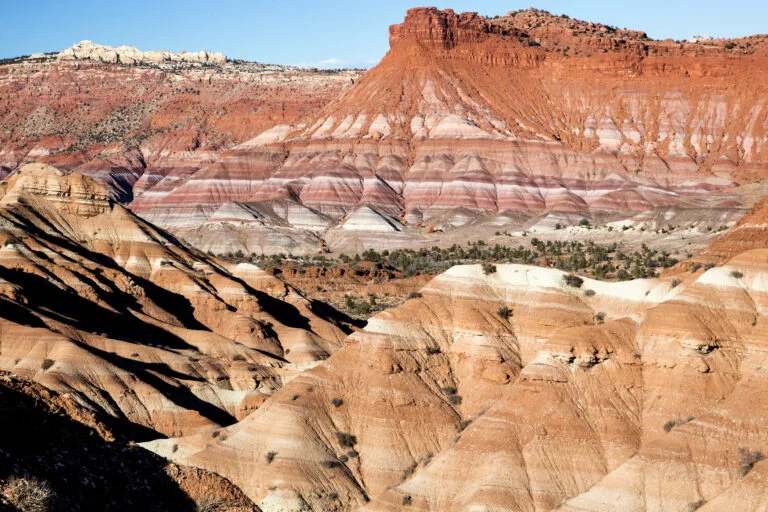
Utah’s Bears Ears and Grand Staircase-Escalante national monuments are among the most prominent examples of reduced public land protection cited in the article. Their prominence makes them useful reference points in a discussion that otherwise spans multiple kinds of federal policy. A monument’s protection can be discussed in terms of a specific place, while rules on drilling, roads, or species protections may affect broader categories of land and activity. The examples show why the debate isn't solely about acreage: the type of protection and the location both matter.
Still, prominent monuments can draw attention away from less visible changes. A policy affecting how conservation is weighed, or whether tribal engagement occurs, may matter in places that receive less public notice. The tracker’s structure invites readers to connect those less visible decisions with the better-known examples. If you're working in this space, the practical question is how each action changes management on the ground, and whether the separate changes reinforce one another.
What to watch in the policy record
The tracker’s central point is that the cumulative consequences of policy changes may be more significant than each action considered alone. That claim is plausible as a framework for analysis, but it needs to be tested against the details of each action and its effects. A useful assessment would distinguish changes to formal protections from their implementation, identify which lands and activities are affected, and clarify where consequences overlap. The article doesn't supply that full assessment; it describes CLF’s effort to make the actions and their shared themes visible.
Here's the thing: a count of actions is a starting point, not a verdict. The 12 entries and the cited 86 million acres give readers a reason to examine the policies together, while the eight impact categories provide a map of the concerns CLF raises. The next question is whether the underlying changes produce the lasting, connected effects the group warns about. That requires attention to the rules themselves and to how they are applied. The stakes are substantial, but the evidence should remain tied to the specific policy and place being discussed.
This article was originally published on Mongabay, where the original report presented CLF’s tracker and its argument about the combined effects of these policies. The tracker’s value lies in prompting readers to view separate decisions as part of a broader record. Its claims remain most useful when readers can follow each action back to the land, rule, or process it affects. A pattern can be consequential, but understanding it requires examining its parts.



Discussion
Sign in to join the discussion.