A rare hound prized in Sarail faces pressure as Bangladesh’s stray dogs remain vulnerable to neglect and cruelty.
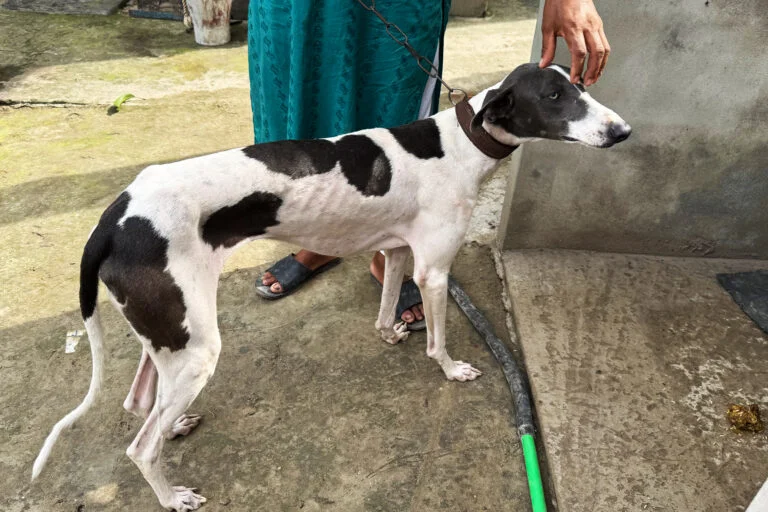
A local breed with an uncertain future
Bangladesh’s Sarail hound has a devoted local following, but that loyalty hasn’t made its future secure. In the town of Sarail, about 95 kilometers (60 miles) northeast of Dhaka, residents have worked for generations to preserve the native breed. Some are now trying to prevent it from disappearing, while dog lovers—including visitors from abroad—come looking for puppies and may pay up to 60,000 takas ($500). That price signals interest, but it doesn’t tell us how many dogs remain, how many are breeding, or whether demand can support the breed over time.
A rare local breed carries more than an appealing appearance or a market price. It can represent a link between a place and its history, maintained through the knowledge and effort of people who have kept the dogs across generations. The Sarail hound’s story is therefore tied to the residents who care for it: their commitment is part of what has preserved the breed, and that work may be difficult to pass on if fewer people choose to continue it. Here’s the thing: a few interested buyers can create attention, but lasting preservation requires care and continuity beyond individual sales.
Preservation amid a difficult national context
The breed’s prospects sit within a difficult national context for dogs. Bangladesh has nearly 1.7 million dogs, about 83% of them strays, many facing hunger, malnutrition, injuries and abuse. Those conditions shape how people encounter dogs day to day. A rare hound with local advocates is one part of that picture; the much larger population of strays faces a different set of immediate problems.
A conservative view of domestic dogs persists among much of the country’s Muslim-majority population, and cruelty toward strays has often been treated as entertainment. That backdrop can make efforts to protect dogs harder to sustain, especially when the animals are viewed as a public nuisance rather than as creatures needing care. The source doesn’t suggest that every person shares the same view, and the work of advocates and Sarail residents shows that attitudes and commitments vary. But the broad setting matters: preserving a breed is harder when dogs generally receive limited sympathy.
Authorities once culled street dogs; the 2019 Animal Welfare Act ended that practice. The change marks a shift in official policy, though a law by itself can’t ensure that dogs are fed, treated for injuries, or protected from abuse. Those outcomes depend on how rules are put into practice and on whether people and institutions respond when animals are at risk. A legal change can set a boundary. Daily conditions determine what it means on the ground.
Public outrage and the limits of intervention
Public anger over alleged abuse can still prompt official action. Last year, a woman in Ishwardi drew an outcry after allegedly putting puppies in a sack and drowning them in a pond. Authorities filed a criminal lawsuit against her. The account describes an allegation and a lawsuit; it doesn’t establish the case’s final outcome. Even so, the reaction shows how a reported incident can bring animal cruelty into public view and lead to an official response.
That response is significant, but it also points to the limits of relying on outrage. Attention tends to gather around a shocking incident, while hunger, malnutrition, injuries and neglect can persist without the same burst of public focus. Animal advocates are working to protect strays, but the scale of need described in the source suggests that the task extends well beyond any single case. And this is the part most people overlook: a high-profile response doesn’t, by itself, tell us whether everyday treatment of dogs is changing.
The Sarail residents’ work addresses another kind of vulnerability. They’re trying to safeguard a rare piece of local heritage, while animal advocates are working to protect strays. These aims overlap in concern for dogs, yet they involve different pressures. One centers on keeping a native breed from disappearing; the other responds to widespread hardship among street dogs. If you’re working in this space, that distinction matters when deciding what kind of support is needed.
What preservation will require
The hound’s survival will depend on whether that commitment can endure. The source identifies local residents as the people who have maintained the breed and describes interest from buyers, including visitors from abroad. It doesn’t say how organized breeding works, how many dogs are left, or what resources residents have. Without those details, it’s difficult to judge how close the breed is to disappearing or which interventions would help most. The clearest point is that its future rests on continued human attention.
Interest from outside Sarail may help make the breed visible, and the reported price suggests that some buyers are willing to pay for puppies. Yet demand alone can’t answer the central question: will enough people remain committed to caring for the hound over time? A market can reward availability; preservation also depends on people keeping the breed’s continuity in view. That’s a more demanding test than whether a puppy can find a buyer.
For Bangladesh’s dogs more broadly, the contrast is stark: a rare hound has a local constituency, while a large stray population faces basic hardship. Neither story cancels out the other. The hound’s survival would preserve a piece of local heritage, but it won’t resolve the conditions facing strays; attention to strays, in turn, doesn’t guarantee that the breed will endure. The numbers here are underwhelming as a measure of progress: the source gives a price and a national dog estimate, but no count of Sarail hounds or clear measure of preservation. A long effort, with no guaranteed outcome.
That said, local commitment is a real starting point. Whether it can last will depend on people continuing to value the dogs and do the work of keeping them. The Sarail hound’s future remains uncertain, and the distinction between public interest and durable care is likely to shape what happens next.
This article was originally published on Mongabay



Discussion
Sign in to join the discussion.